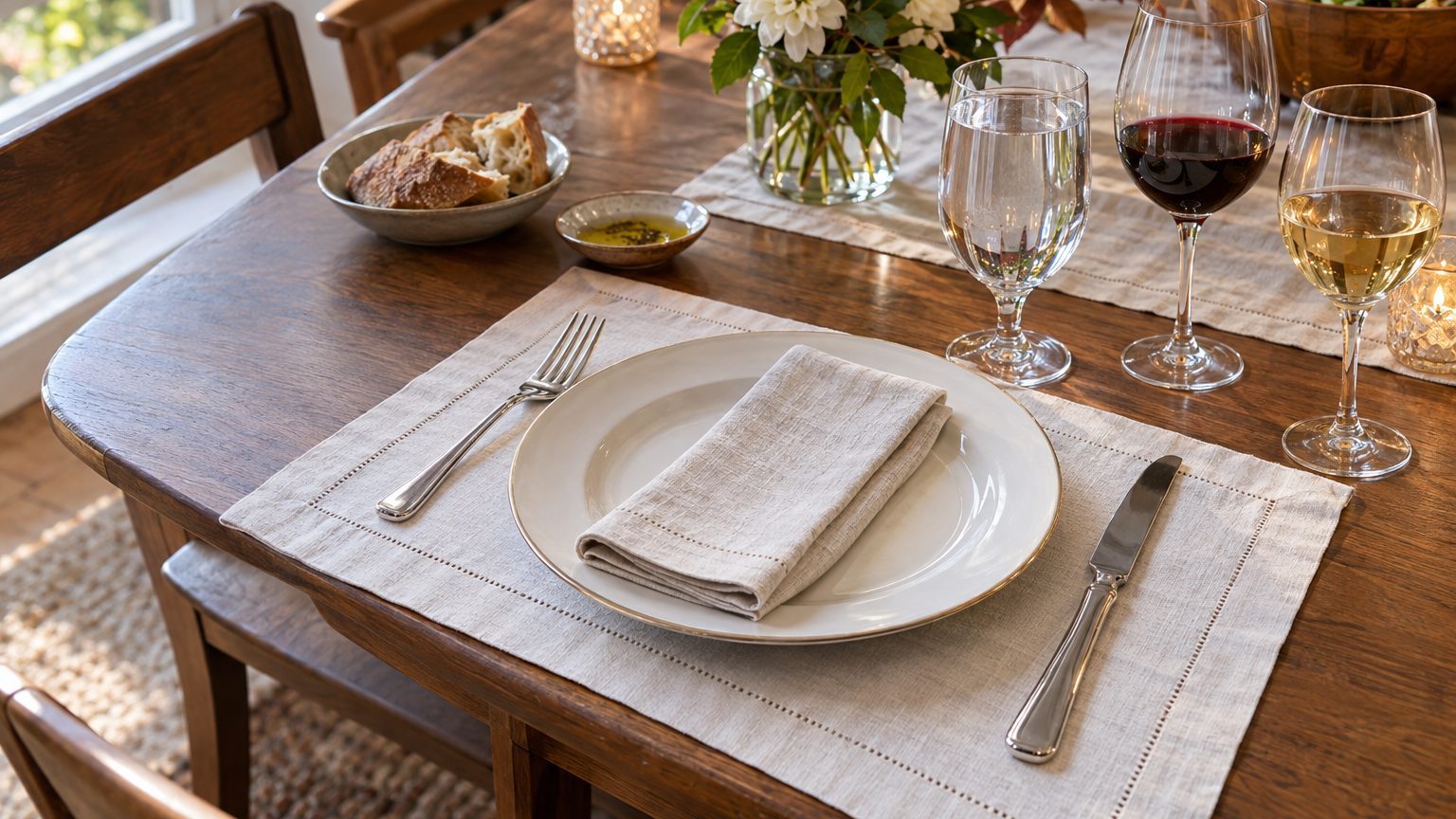
Glasses go on the right side of the place setting, above the dinner knife. The water glass sits directly above the knife tip. Any other glass (red wine, white wine, champagne) goes to its right, in a slight diagonal line or a small cluster, ordered by when guests will drink from it. The Emily Post Institute describes the water glass as sitting above the knife or at a 45-degree angle to the right of it. That one anchor point settles most arguments. Here we cover glasses only. For the full layout, see how to set a table.
Water glass placement
Why the water glass sits just above the knife
The knife sits in a fixed spot on the right side of the plate, so it makes a reliable marker. Find the knife tip. Set the water glass a finger or two above it, so the base clears the blade. If the table is tight, slide the glass to the 45-degree spot up and to the right of the tip. Don’t go further than that. The glass belongs to the water, and the water stays all meal. Other glasses come and go as courses change, which is why water gets the steadiest position.
Stemmed vs. tumbler water glasses
A stemmed goblet suits formal dinners. A tumbler suits casual meals and any table with kids or a lot of elbow traffic. Both take the same spot, so you can swap one for the other without changing the layout. Pick one type of water glass for the whole table. Mixed shapes make a row of place settings look accidental.
Wine glass placement
Red wine glass vs. white wine glass position
Wine glasses go to the right of the water glass. With a single wine, set it directly right of the water, whether red or white. With both, the order of use decides. White usually comes first, so it sits farthest right, nearest the guest’s hand. Red goes between the water glass and the white. A glass you won’t use until later stays closer to the water glass or toward the back of the group.
Setting more than one wine glass
The Emily Post Institute sets the water glass first, as an anchor, and lets the other glasses group around it or cascade down and to the right. A dessert wine glass, served last, sits nearest the water glass in a line. Wine glasses stand taller than tumblers, so check sightlines across the table. A guest shouldn’t have to lean around stemware to see a neighbor.
How to arrange glasses on a table
The diagonal line method (right to left)
Start with the water glass above the knife tip. Place each next glass slightly lower and to the right, so the row slants down toward the plate’s right edge. Guests drink from the right end first and work back toward the water. The Emily Post Institute describes glasses cascading down and to the right from the water glass. Some guides prefer a cluster or small triangle, with the first-used glass closest to the plate and later glasses toward the back. The sources agree on the water anchor and on order of use. They differ only on shape, so choose the one that fits your table.
Where champagne flutes, iced tea glasses and coffee cups fit
A champagne flute for a toast is used first, so it goes at the far right end of the line, or the front of a cluster. Etiquette guidance treats drinking glasses of any kind, iced tea included, as belonging top right, above the knives and spoons. A tall iced tea glass takes the water glass’s spot, or sits just right of it when both are set. A coffee cup and saucer, if served with the meal, goes above and to the right of the knife and spoons.
Spacing glasses so guests don’t knock them over
Leave a finger’s width of air between glass bases. Keep rims clear of the knife and of any dessert utensils above the plate. Reaching for the water glass shouldn’t brush the wine glass beside it. If the glasses crowd, cut one glass before you shrink the gaps.
Which side do glasses go on, left or right?
Right. Drinks live on the right of the dinner plate, above the knife and spoons. The left side belongs to forks and food.
A simple memory trick: “drinks on the right”
Touch the tips of your thumbs to your forefingers. Your left hand forms a lowercase “b” (bread), your right a “d” (drinks). The Emily Post Institute teaches this one. The BMW rule works the same way, reading left to right: Bread, Meal, Water. Bread sits on the left, the dinner plate in the center, and glasses on the right. That “W” stands in for the whole drinks zone, wine included. The bread plate has its own explanation in the sibling guides.
How many glasses should each guest have at Thanksgiving?
Two is enough for most Thanksgiving tables: water plus one other drink. Formal meals add more. Here is how the layouts compare.
| Meal type | Number of glasses | Which glasses | Position | Order of use |
|---|---|---|---|---|
| Casual | One or two | Water, plus one wine, iced tea or sparkling cider | Water above the knife tip (or 45 degrees right); second glass directly to its right | Water throughout; second glass with the meal |
| Semi-formal | Two or three | Water, one wine (maybe two), or a sparkling toast glass | Water above the knife; wines to its right in a short diagonal | Right to left; lighter wine before red |
| Formal | Three or four | Water, white wine, red wine, plus champagne or dessert wine | Water above the knife; others in a diagonal line or cluster to its right | Right to left; champagne first, dessert wine last |
Casual dinner: one or two glasses
A holiday table is packed with serving dishes, so fewer glasses help. Set water and one more: wine for the adults, sparkling cider for non-drinkers, or iced tea. Use matching stemware for wine and cider and nobody feels left out. Pour from the sideboard rather than parking bottles among the dishes.
Formal dinner: up to three or four glasses
Etiquette allows water plus two or three others at a private formal dinner. Some retailers go to five, but that needs a wide table. The formal table setting guide covers the rest of the place.
What are some common glass placement mistakes?
Glasses too far from the knife
A glass drifting toward the center of the table is no longer part of the place setting. Fix it by returning the base to just above the knife tip. The how to set a table with silverware guide shows where the knife itself should sit.
Crowding the place setting on a small table
Three glasses on a narrow table can easily collide. Use only what guests will drink: two glasses, not four. If space is still tight, set the water glass and pour wine at the table, or shorten the diagonal.
Setting glasses on the left side
Glasses above the forks are the classic slip. They also crowd the bread plate. Move every glass back to the right, above the knife, and keep the “b” and “d” hands handy.
Frequently Asked Questions
Can I use the same glass for water and wine?
At a casual dinner, yes, especially with a stemless tumbler. At anything more formal, use separate glasses. Water stays all meal, and wines change with courses, so one glass can’t serve both without tasting like the other.
Do you set glasses before guests sit down?
Yes. Water and wine glasses are set with the rest of the place setting before guests arrive. Fill water glasses just before seating if you like. Wine is poured at the table once guests are seated.
Where do you put a coffee cup on a table setting?
Above and to the right of the knife and spoons, if coffee is served during the meal. Otherwise it is brought with dessert, so leave the space free until then.
Where do you put kids’ cups at a Thanksgiving table?
Put them in the water glass spot, above the knife tip. Use an unbreakable tumbler and set it a little closer to the plate, so a child doesn’t have to stretch. If kids sit at their own table, follow the same layout there.
Sources: chefsresource.com | cookedbytaste.com | cvlinens.com