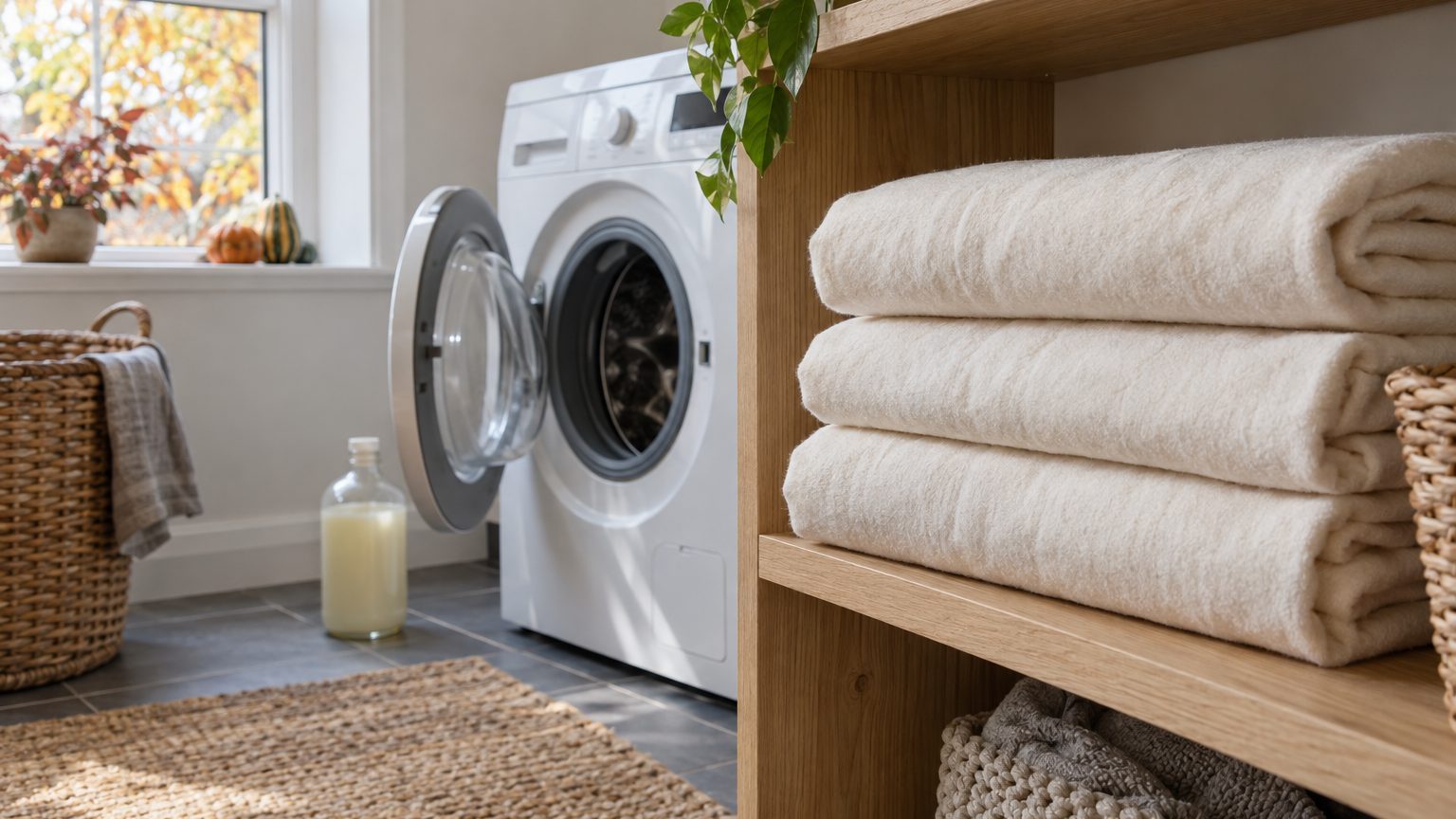
Wash flannel sheets in cool or cold water on a gentle cycle, with a small measure of mild detergent. Then dry them on low heat, or hang them in the shade. That routine covers most care labels, and it protects the brushed surface that makes flannel feel like flannel. The details below decide whether a set lasts one winter or five.
Flannel is not a delicate fabric in the way silk is. It is ordinary cotton that has been mechanically roughed up to trap warmth. That brushing is also its weak point, so a sloppy laundry day can wear out a set faster than months of sleeping on it.
How to keep flannel sheets from pilling
Start with how pills form.
Flannel gets its fleecy feel from a process that raises the nap of the cotton, which makes the fabric cozier but also prone to pilling if it isn’t cared for properly.
The American Cleaning Institute describes pilling in general terms:
fibers break off the surface, ball up and cling there.
A flannel sheet is a field of exposed fibers, and every wash cycle mows it a little.
So the goal is to cut friction at each step. The first step is the load itself.
One test-kitchen style guide suggests filling the washer no more than three-quarters full
, and another recommends
one sheet and a pair of pillowcases per cycle.
A crowded drum makes the fabric rub against itself, and
overloading the machine is also said to make flannelette shrink more.
Keep towels and jeans out of the load.
Heavy items increase abrasion and encourage pilling.
Towels also shed. The American Cleaning Institute’s troubleshooting chart lists
sweaters, bath towels and flannels
among the lint-producing items that should not share a wash with synthetics or other napped fabrics.
Water temperature comes next. Several bedding makers say cool or cold is best for flannel.
Warm water removes body oil and greasy stains better but can wear the sheets down faster, while cold water preserves the texture and color.
Choose a delicate or gentle cycle,
with a lower spin speed.
Turning the sheets inside out is a cheap extra step, since it
reduces surface wear.
Detergent is where people overdo it. A sheet-maker’s guide advises that
only a small amount of laundry powder or liquid
be used, and suds are not a sign of better cleaning. Fabric softener is a real disagreement in the laundry world. Several flannel makers say to skip it because
residue can lead to pilling.
The American Cleaning Institute, a trade body for cleaning products, argues the opposite:
softener can extend the life of clothes by reducing friction and wear.
It adds that you should
check the care label for any precautions.
I lean toward the sheet makers here, because they know their own weave. If your label says nothing, a small amount in the washer’s softener dispenser is the lowest-risk way to test it. Dryer sheets are the ones to skip.
Stains need patience, not muscle.
Abrasion is the main cause of pilling, so scrubbing is a bad idea. Blot fresh stains instead.
On laundry day you can work a little extra detergent into the spot before washing as usual.
If pills have already appeared, don’t pick at them.
The American Cleaning Institute suggests patting a linty item with masking or transparent tape
to lift fibers off the surface. A lint roller does the same job on a sheet that hasn’t gone through many cycles.
One more habit belongs here. New flannel should get a wash before anyone sleeps on it.
New flannel carries loose fibers from manufacturing
, which is why a first wash on its own, in cold water, is worth the extra load.
Can flannel sheets go in the dryer
Yes, most can, as long as the dial stays low. Heat is where flannel gets into trouble.
Flannel is typically pre-shrunk, but high heat can shrink the cotton further and set broken fibers into pills.
A sheet that fit the mattress in October can pull at the corners by January if the dryer ran hot all autumn.
Check the care label for a single dot. In the standard symbol system the American Cleaning Institute publishes,
more dots mean more heat, and more bars mean a gentler cycle.
One dot is low heat, which is the setting you want. If your dryer has an “air fluff” or delicate option,
those are ideal.
How long the sheets tumble matters as much as the temperature. Flannel is thin, so it dries quickly, and
over-drying is cited as a cause of pills.
The usual advice is to
pull the sheets out while they are still slightly damp.
Shake each piece out before it goes in so it can open up, and clean the lint trap partway through.
The excess fibers mean it may need emptying halfway.
A clogged trap slows airflow, which means longer, hotter drying.
Dryer balls divide the experts. One bedding brand recommends
wool dryer balls to fluff the sheets and cut static without chemical softeners.
A flannel specialist says the opposite:
never use them, since the extra agitation can cause pilling.
Neither claim comes from a lab test I could verify, so treat it as a judgment call. If you’ve had pilling problems, try one sheet without them.
Line drying is the gentlest option. A sheet-maker’s guide suggests
drying in the shade to reduce heat and abrasion.
Direct sun can fade colored flannel. Plan for time, though. Flannel is thicker than percale and holds moisture, and the American Cleaning Institute’s spokesperson cautions that
sheets must be fully dry before going back on the bed, because moisture can attract mold and dust mites.
The same spokesperson notes that
hanging sheets outside can attract dust and pollen
, which matters if allergies are the reason you’re washing in the first place.
How often to wash sheets
The answer depends on whom you ask. Cleveland Clinic’s dermatologists say
at least once a week.
The American Cleaning Institute’s guidance is
every two weeks
, and
weekly if you sweat a lot at night or are sensitive to dust.
Purdue Extension lands in the same place:
at least every two weeks, or weekly for heavy sweaters and people sensitive to dust.
A reasonable reading is that weekly is the ideal and every two weeks is the outer limit for a healthy adult.
The math supports the weekly camp. One home-care writer points out that
seven nights of seven or eight hours adds up to 50 hours or more with your skin pressed against the same fabric.
That is more than a full work week spent on one piece of cloth.
Flannel doesn’t change the health logic, though some retailers suggest stretching the interval. One laundromat guide says
to wash after one to two weeks and avoid washing after just a few days unless necessary
, to protect the texture. I’d treat that as a ceiling, not a target. Pilling comes from how you wash, so cutting a weekly wash to save the fabric trades hygiene for a problem you can solve with settings.
Some situations call for faster turnover. Cleveland Clinic lists
allergies or asthma, an infection that touches your sheets, heavy sweating, a pet in the bed, eating in bed and going to bed without showering
as reasons to wash more often. Winter adds its own twist. Flannel is warm enough that heavy sleepers can run hot under it, and a damp sheet is a reason to wash early. Pillowcases collect hair products and facial oils and
can be changed more frequently.
Layering also helps. A top sheet or duvet cover takes the body contact, so blankets and comforters can go longer.
Comforters and pillows can be washed every six months or as needed.
If you’re building a winter bed in layers, the guide on how to layer bedding shows which pieces take the body contact and need frequent washing.
If you’re still deciding on materials, the flannel vs fleece sheets comparison covers how each fabric handles washing, and the roundup of the best bedding for winter puts flannel in context with the other cold-weather options.
One tension is worth flagging. Cleveland Clinic recommends hot water for sheets because
heat kills off dust mites.
Flannel makers say cool or cold. Anyone with a dust-mite allergy faces a real trade-off. The care label is the tiebreaker. If it allows warm water, use it. If it caps the temperature at cool, wash more often rather than hotter, and ask your allergist whether a mite-proof mattress and pillow cover would help.
Sources : stgeneve.com