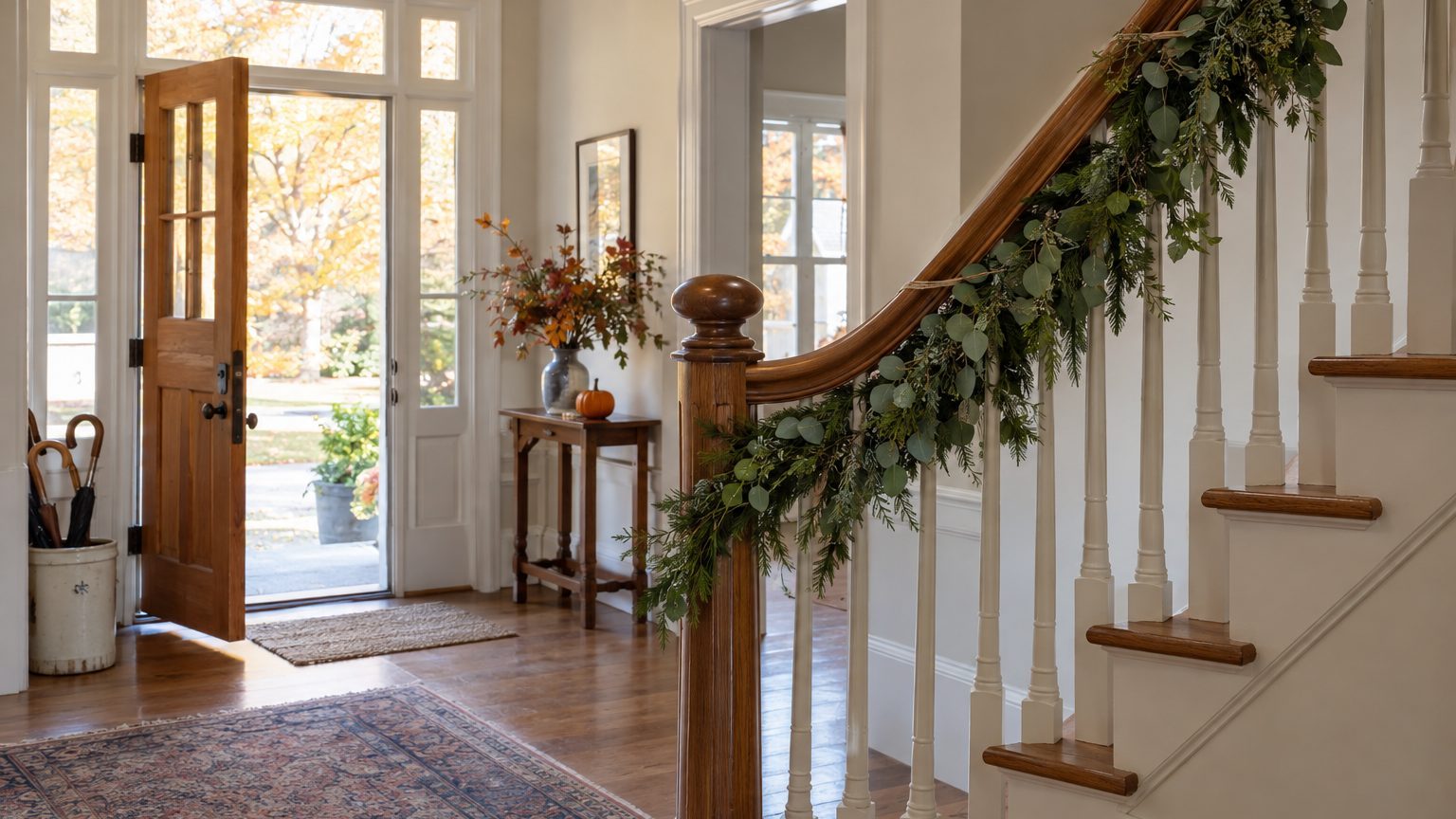
The best christmas garland ideas begin with an unglamorous question: what sits within three feet of the spot you have in mind? U.S. fire departments respond to an estimated 853 home fires a year that start with Decorations (Christmas trees not included), according to the National Fire Protection Association. More than two in five of those happen because something festive was placed too close to a heat source.
Start with the heat, then worry about style.
Stairs and entryway: where a garland does the most work
A staircase is the classic canvas, and the most common mistake is draping the garland over the handrail. Fix it to the side of the banister instead, on the front face of the spindles and below the rail, so a hand can still grip the wood on the way up. Tie it with green zip ties, floral wire or ribbon, and skip nails, staples and glue.
Wood finishes scratch easily. A cable tie pulled tight against a varnished or painted rail can leave a mark, so slip a small strip of felt or fabric under each tie. Space the ties evenly, because the less weight each one carries, the less it presses into the wood. A fuller, heavier garland needs ties closer together. Buy at least 10% more length than the banister measures, since a garland that is too long is easy to tuck and one that is too short is a headache.
For a swag effect, anchor the top end at the newel post, then pin the garland at a second point and shape the dip between the two. On an open banister with plenty of spindles, a wide spiral wrap gives a looser, more natural look than scallops.
The front door is the other obvious candidate. A spring-tension garland hanger fits inside the doorjamb and holds greenery across the top without drilling into the frame or siding. Hung above the door, a garland also stays clear of wet boots and dripping umbrellas, which matters in an entryway where everything below shoulder height gets splashed from November to March.
Check the floor, too.
Mantel and living room: pretty, but mind the firebox
On a mantel, a strand laid along the top rarely needs reinforcement. Scallops across the front or a spill over the edge look better, though, and clear removable hooks handle both. Attach the hooks to the top surface of the mantel rather than the front edge, where they can bear more weight and the garland is less likely to fall. Clean the surface with rubbing alcohol first and give the adhesive about an hour to set before hanging anything.
Heavy, layered garland with ornaments and lights is a different matter. One approach avoids marking the mantel: drive screws into the wall above it, run metal wire around each one, and zip-tie the garland to the wire. On brick or stone, a clamp-style hanger can grip the shelf instead. A deep mantel can also simply hold the garland in place under heavy objects, such as candlesticks or a framed print.
Real fire changes the calculation. Garland, stockings and greenery should stay away from the firebox opening, and lit candles belong at least 12 inches from anything that can burn. Hang the stockings after the garland, not before, so you can see how much fabric and foliage is crowding the hearth. If a mantel is crowded, the garland is the first thing to move.
Living rooms offer more spots than the fireplace. A garland along the top of a window frame, across a bookshelf, or around a wide archway adds the same effect without the heat. Keep any garland at least three feet from a space heater, even if the label says flame retardant. That phrase means slower to ignite, not fireproof.
Kitchen and bedroom: the quieter corners
Kitchens are tempting because they are where people gather. Christmas Day and Christmas Eve rank right behind Thanksgiving for home cooking fires, which argues for putting garland on the tops of upper cabinets or around the window over the sink, well away from the burners. Paper garland is the worst choice near a stove, since it can act as kindling if a fire starts.
Bedrooms ask for something softer. A strand of lit garland above a headboard or along a dresser makes the room feel warmer in winter, but turn it off before you go to sleep. The same goes for every string of lights in the house, whether they are wrapped around greenery or not.
Plug-in and rechargeable garlands have their own rule. Unplug them once the battery is full and leave room around them to vent heat, rather than burying the charging end under a pile of greenery.
Two minutes of checking before the garland goes up
Look for a UL mark on any electric garland or light strand, which shows an independent lab has tested it. Inspect new and old strands for frays or breaks, and never wrap damaged cords into greenery. Metal tinsel touching a light string can conduct heat or electricity, so choose non-metal ornaments when you can.
Mixing different types of lights on one circuit is another easy way to overload it. Fire departments also advise against stacking incandescent and LED strands on the same run.
Fresh garland needs attention too. Evergreen boughs dry out over the weeks, and dry needles burn fast. Thirty-six percent of Christmas tree fires happen in January, when the tree has been drying for a month, and a cut-greenery garland on a mantel follows the same logic. Take it down when the needles start dropping, then wipe the banister, coil each strand loosely and store it flat or hanging rather than crushed in a tight bin.
Sources : urban-picks.com | thesuffolknest.com