Linen shrinks on the first wash, and it can lose up to 10 percent if the washing and drying go badly. On a tablecloth 108 inches long, 5 percent is more than five inches. That is the difference between a cloth that drapes and one that stops short of the table’s edge.
Knowing how to wash a linen tablecloth comes down to controlling heat and agitation.
Why linen shrinks, and how much to expect
Heat and moisture do the damage together. Hot water paired with high-heat tumble drying produces the most shrinkage. Rough agitation adds to it, because overly vigorous cycles make the fibers rub against each other and pull tighter. Most of the loss happens early, and after two or three washes the fabric stabilizes and usually stops shrinking.
Realistic numbers are modest. A well-cared-for cloth typically loses 3 to 5 percent on the first wash, and tumble drying can push that higher. A cloth sold as pre-washed will move less, but excessive washing or drying heat can still alter its dimensions.
Read the care label before anything else.
Washing: machine or hand, and what goes in with it
Start at the table, not the washer. Shake out the crumbs, then pre-treat visible stains with laundry soap, since pre-treating stains with laundry soap works best before the fibers are soaked and the stain sets deeper. Red wine on a white cloth responds to a dab of white vinegar first.
For machine washing, choose a delicate cycle and cold to lukewarm water. For a brand-new cloth, washing at 30 °C (86 °F) first limits the initial shrinkage. After that, many care guides stay at or below about 104 °F (40 °C). Wash the cloth alone or with a few similar linens, because washing linen separately or in light loads avoids excessive friction. A mesh laundry bag helps if your machine has a vigorous agitator, and a crowded drum is the fastest way to get deep creases.
Hand washing suits embroidered cloths, heirlooms and anything with a hairline of lace. Fill a clean basin or the bathtub with lukewarm water, add a small amount of mild detergent and press the cloth under. Let it soak for 15 to 30 minutes, rub soiled spots gently with your fingertips, then rinse until the water runs clear.
Use a mild detergent and leave the fabric softener on the shelf.
Softeners leave a residue that diminishes the fabric’s natural texture, and linen softens by itself with every wash anyway. Bleach is a narrow exception. Reserve it for pure white linen, and even then an oxygen-based booster (hydrogen peroxide or sodium percarbonate) is kinder to the fibers. Dyed and natural-oat tablecloths should never see chlorine at all.
One more habit pays off for dinner-party cloths. Wash whites on their own, because washing white linens separately avoids dye transfer from other fabrics. A gray tinge on a cream cloth is almost always a laundry-load mistake, not an age problem.
Drying without losing an inch
The dryer is where most tablecloths lose their length. High Temperature can shrink linen by up to 3 percent on top of whatever the wash took. Air drying avoids that second hit entirely.
Take the cloth out of the machine the moment the cycle ends. Wet linen left in a drum sets wrinkles within an hour, and those creases are the ones that need a hot iron and patience to remove. Give it a firm shake, snapping it open to loosen the folds, before it goes anywhere else.
Skip the dryer if you can.
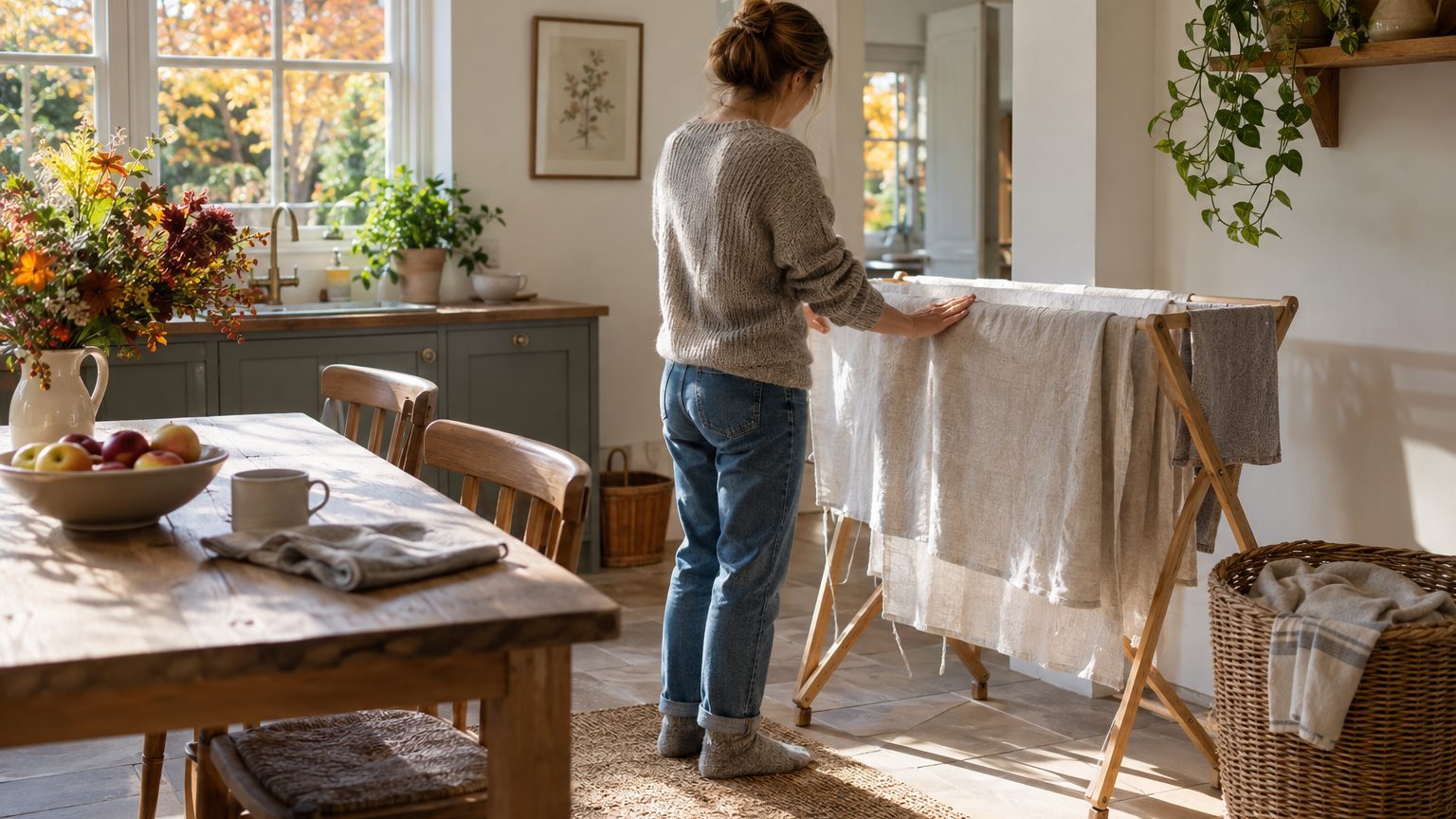
For a large cloth, a drying rack, a clean shower rod or two chairs back to back all work. Hang it so the weight is distributed evenly, because laying it flat on a rack or hanging it evenly dries without creases. Keep it out of direct sun, which fades colors and can yellow white linen. If you have to speed things up, open a window or point a fan at it.
Another method suits delicate pieces. Lay the wet cloth on a clean towel, roll them up together and press gently, then unroll it onto a flat surface and smooth out the wrinkles by hand. The towel pulls out a surprising amount of water, so the cloth is damp rather than dripping. The drying time drops by hours.
If the label allows tumble drying and you are in a hurry, the rule is low heat and an early exit. Remove the item while it is still slightly damp, since over-drying brings stiffness, creasing and extra shrinkage.
Ironing, and rescuing a cloth that already shrank
Linen irons best when it is still a little damp, with a hot iron and no hurry. Work on both sides. If a crease refuses to move, cover it with a damp cotton cloth and iron over that. When you finish, leave the cloth lying flat to cool completely before storing it.
A cloth that has already shrunk is not necessarily a lost cause. Wash and dry it again at the correct temperature, then use an iron to lightly pull and expand the fibers back toward their original shape. Gently stretching the fabric by hand while it is damp, working from the center out to the corners, can recover some of the lost length. Expect a partial fix rather than a full reversal.
Plan on a little slack when you buy new, too. A cloth that hangs exactly to the table’s edge on day one may sit an inch or two higher after its first wash, so measure the drop you want and size up slightly. Then wash it gently once, and the second and third washes will barely change it.
Sources : laveries-speed-queen.fr | tablecoversnow.com