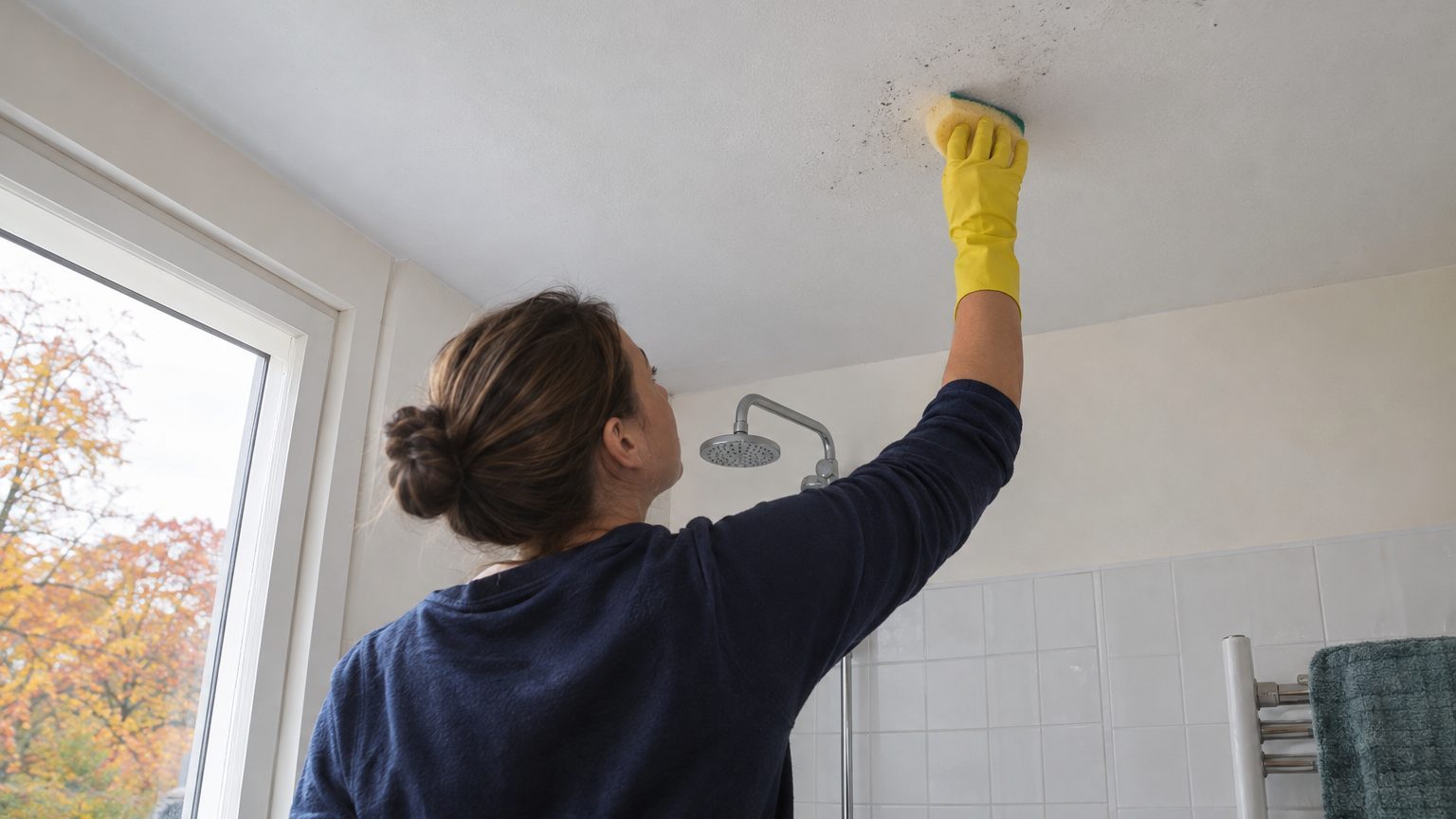
Small black spots on a painted bathroom ceiling are usually a one-afternoon job, not a renovation. The EPA’s rule of thumb, as most guides relay it, is about 10 square feet. Small patches under 10 square feet on a painted ceiling are safe to handle yourself.
The paint is easier to ruin than the mold is to remove.
- Small painted-ceiling mold patches under 10 square feet can usually be handled by a homeowner.
- Dish soap and water is the gentlest effective cleaner, and drying thoroughly matters more than the product used.
- Never mix bleach and vinegar, because the combination releases toxic chlorine gas.
Read the ceiling before you spray anything
Press a clean finger against the stained spot. If the surface is firm and dry, you are dealing with growth sitting on the paint film. If the drywall is soft, sagging, or stained through, the board is water-damaged and cleaning will not be enough. The same goes for mold that returns after a previous cleaning, which points to moisture feeding it from somewhere.
That somewhere is often boring. A fan that vents into the attic instead of outdoors, a slow plumbing drip above the tub, or simply steam that never leaves the room. If the cause is a roof leak, condensation, or a bathroom venting into the attic, the mold returns until that water problem is corrected. A scrubbed ceiling over an unsolved leak looks clean for about three weeks.
Size matters too. Spots scattered across a whole ceiling, or a patch bigger than a bath towel’s footprint, belong to a certified remediation contractor.
Choosing a cleaner that leaves the paint alone
Here the advice splits, and it helps to know why. The EPA’s default for mold on hard, painted surfaces is plain detergent and water. The EPA does not require bleach for mold cleanup; thorough drying matters more than the cleaner used. Dish soap in warm water is the gentlest option for your paint, and for fresh, light spotting it is often enough.
Many homeowners want something stronger, and the three usual candidates behave differently on a ceiling. Distilled white vinegar, sprayed undiluted, is the most popular. It kills many mold species and avoids chlorine fumes, which is a real benefit in a tight bathroom. The trade-off is that it has a strong smell, and one restoration guide notes it may lighten some paints. Three percent hydrogen peroxide is the milder, low-fume choice, though you should test it first to make sure it doesn’t cause discoloration.
Bleach is the contested one. On a sealed, intact painted surface it removes dark stains well, and a common dilution is roughly one cup of bleach per gallon of water. But the EPA says using a biocide like chlorine bleach is not recommended as a routine practice during mold cleanup. And where the drywall paper underneath is already colonized, bleach’s water content can soak in while the chlorine stays on top.
Never combine bleach and vinegar.
Mixed, they release chlorine gas, which causes coughing, chest pain, and respiratory failure, and can be fatal at high concentrations. Choose one product per session, rinse well, and wait a day before trying a second.
How to remove mold from a bathroom ceiling, step by step
Start with protection, because everything you loosen falls toward your face. The CDC’s mold cleanup guidance, as summarized by a restoration company, calls for a NIOSH-approved N95 respirator, gloves, and fully protective goggles. Lay a drop cloth under the work area and open a window, or at least run the fan.
Next comes a step most people skip. Lightly mist the mold with water before applying cleaner, because damp spores do not become airborne. It takes ten seconds and cuts down the dust you inhale.
Apply your chosen cleaner with a sponge or a barely dampened cloth rather than soaking the ceiling. Drywall paper drinks water, and a dripping ceiling is how a surface problem becomes a structural one. Work in small sections and wipe in one direction to lift rather than smear the mold. Let vinegar or peroxide sit for 10 to 15 minutes, since most guides put contact time in that range.
Then scrub, and this is where paint gets damaged. Use a soft-bristle brush or a sponge, never a stiff wire brush or an abrasive pad. One guide describes the right pressure as enough that the mold peels up without lifting the paint. If a spot refuses to budge after two gentle passes, stop. Repeating the treatment on another day is kinder to the finish than scouring.
Finish by wiping with a clean, barely damp cloth to remove residue. Then run the fan and let the ceiling dry fully. A HEPA vacuum pass afterward helps pick up loose spores, though a household vacuum without that filter can blow them back into the room.
Repainting without sealing the problem in
Patience pays off here. One restoration source recommends letting the ceiling dry for 24 to 48 hours minimum, with a fan or dehumidifier speeding things along. Painting over a damp surface traps moisture at the paint line and invites the mold right back.
Ghost stains sometimes remain after cleaning, a faint gray shadow where the colonies sat. A stain-blocking primer handles that. Another guide specifies a shellac-based stain-blocking primer, then a mold-resistant semi-gloss or eggshell. The same source warns against flat latex on a bathroom ceiling, since it holds moisture. Worth knowing before you grab the leftover ceiling white from the garage.
Mold-resistant paint is not a cure. It only helps on a fully clean, dry surface, and it does not stop regrowth if moisture or live mold remain.
Prevention is mostly about steam. Run the exhaust fan during every shower and for about 30 minutes afterward, and crack the door so humidity can spread out instead of settling on the coldest surface in the house. In winter, that surface is the ceiling, so wipe off heavy Condensation with a towel. The EPA suggests keeping indoor humidity between roughly 30 and 60 percent, and a cheap hygrometer from a hardware store will tell you where your bathroom sits.
Check the fan itself, too. Hold a single square of toilet paper against the grille while it runs. If the paper doesn’t cling, the fan is moving too little air to protect the ceiling, and no cleaner or paint will make up for that.
Sources : nationwidebuilders.us | moldremediation.io