Relative humidity above 50 to 60 percent gives mold the conditions to colonize porous surfaces within 24 to 48 hours. That is shorter than a weekend, and a steamy bathroom can clear that bar before breakfast. Learning how to get rid of condensation in a bathroom comes down to three moves: push the steam outdoors, warm the surfaces it lands on, and dry whatever is left.
- A 6×8 bathroom needs at least 48 CFM of fan capacity.
- Duct losses can cut real airflow by 20 to 30 percent or more.
- Squeegeeing tile and glass after a shower prevents most mildew streaks.
- Heated defogger pads keep mirrors clear by warming the glass surface.
Start with the fan, because it is probably underperforming
Sizing comes first. The Home Ventilating Institute publishes the formula most US building codes reference. For a bathroom under 100 square feet, you multiply the square footage by 1 to get the minimum CFM. A 6×8 bathroom needs at least 48 CFM, and an 8×10 needs at least 80.
The number printed on the box is a best-case figure. Every foot of duct, every elbow and every foot of vertical rise cuts real-world airflow, sometimes by 20 to 30 percent. One inspection firm reports that installation losses reduce effective airflow by over 40% in many homes. Its advice is to buy a fan rated 25 to 30 percent higher than your calculated need, and keep the duct run short and straight. A fan rated at 80 CFM on paper may be moving little more than half that.
A fan that vents into the attic causes hidden mold and structural damage.
Run time matters as much as power. One guide recommends running the fan during and for 30 minutes after showers and holding indoor humidity between 30 and 50 percent. Most people flip the switch off when they leave the room, so the fan stops just as the steam is peaking. A timer switch or humidity-sensing control fixes that, and some newer fans run continuously at a very quiet, low speed, then ramp up when a sensor detects excess moisture.
A dusty grille cuts airflow too, so clean the fan regularly. A cheap test is to hold a square of toilet paper against the grille while the fan runs. If it falls off, the fan is weak.
Walls and ceiling: where the water actually runs
Condensation occurs when warm, moist air meets a cold surface, such as a mirror or tiled wall. Exterior walls and ceilings under an unheated attic are the coldest surfaces in most bathrooms, which is why they drip first. Raising the thermostat a few degrees before a winter shower, as one retailer suggests, narrows the gap between air and surface.
Thirty seconds with a squeegee beats thirty minutes of scrubbing mildew.
That is not an exaggeration. Residual moisture that sits for extended periods is the most common cause of mildew streaks and wall discoloration. Squeegee the tile and glass before you step out, and hang the towel and bath mat where air can reach them.
Pipes are easy to overlook. Cold water pipes can contribute to condensation, so insulate any that are exposed. In a small bathroom, a sweating supply line behind the vanity can keep a cabinet floor damp for months without anyone noticing. If the room has a window, opening it after the shower helps. Homes without exterior windows should rely on the fan alone.
The mirror: clear glass without the chemistry set
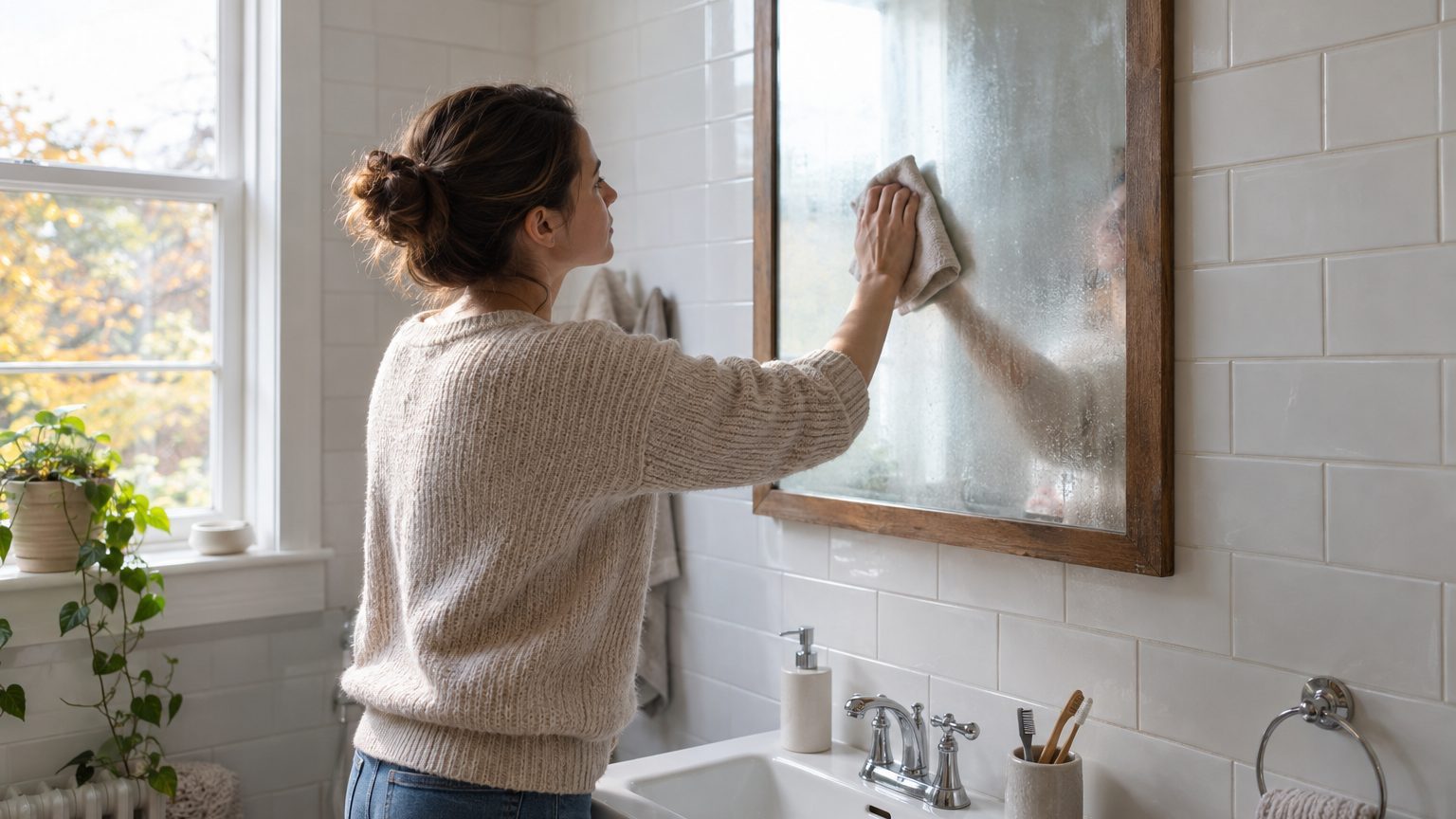
A mirror fogs for a simple reason. Warm, moisture-laden air condenses on cooler glass during showering, and this happens fast in enclosed bathrooms with limited ventilation. The internet’s fixes include shaving cream, a vinegar-and-water spray and even a banana peel. The vinegar mix is said to keep glass free from steam for a few days. Wiping the glass or spraying it gives short-term clarity but does not address the root cause. I would treat all of these as stopgaps.
The durable fix is heat. Defogger pads attach to the back of the mirror and gently heat the surface to prevent fogging. They are easiest to add during installation, since the electrician applies the pad as backing before the mirror is mounted. Many heated mirrors come with the element built in, so the retrofit may not be worth it unless you are replacing the mirror anyway.
A foil-behind-the-mirror hack is also going around online.
It involves placing aluminum foil behind the mirror to reduce condensation. It needs a gap between mirror and wall and some fiddly mounting. I would try the fan and a heated pad first.
Shower habits that cut the steam at the source
Less steam means less to remove. A slightly cooler, shorter shower produces noticeably less vapor, and one retailer’s checklist includes wiping up water around the basin and floor, fixing any leaks, and airing out damp bath mats and towels. Leaving the door slightly open after you finish lets moist air drift out instead of settling on the cold wall.
If the room stays damp even with a working fan, a dehumidifier is worth considering. Keep it out of the splash zone and well away from the tub.
Perfection is not on offer. Some condensation is inevitable in any bathroom. The goal is to keep the fog from turning into drips, stains and spores. If you find mold covering more than 10 square feet, professional remediation is necessary. At that point, no fan upgrade will fix it.
Sources : bathify.com | homesandgardens.com