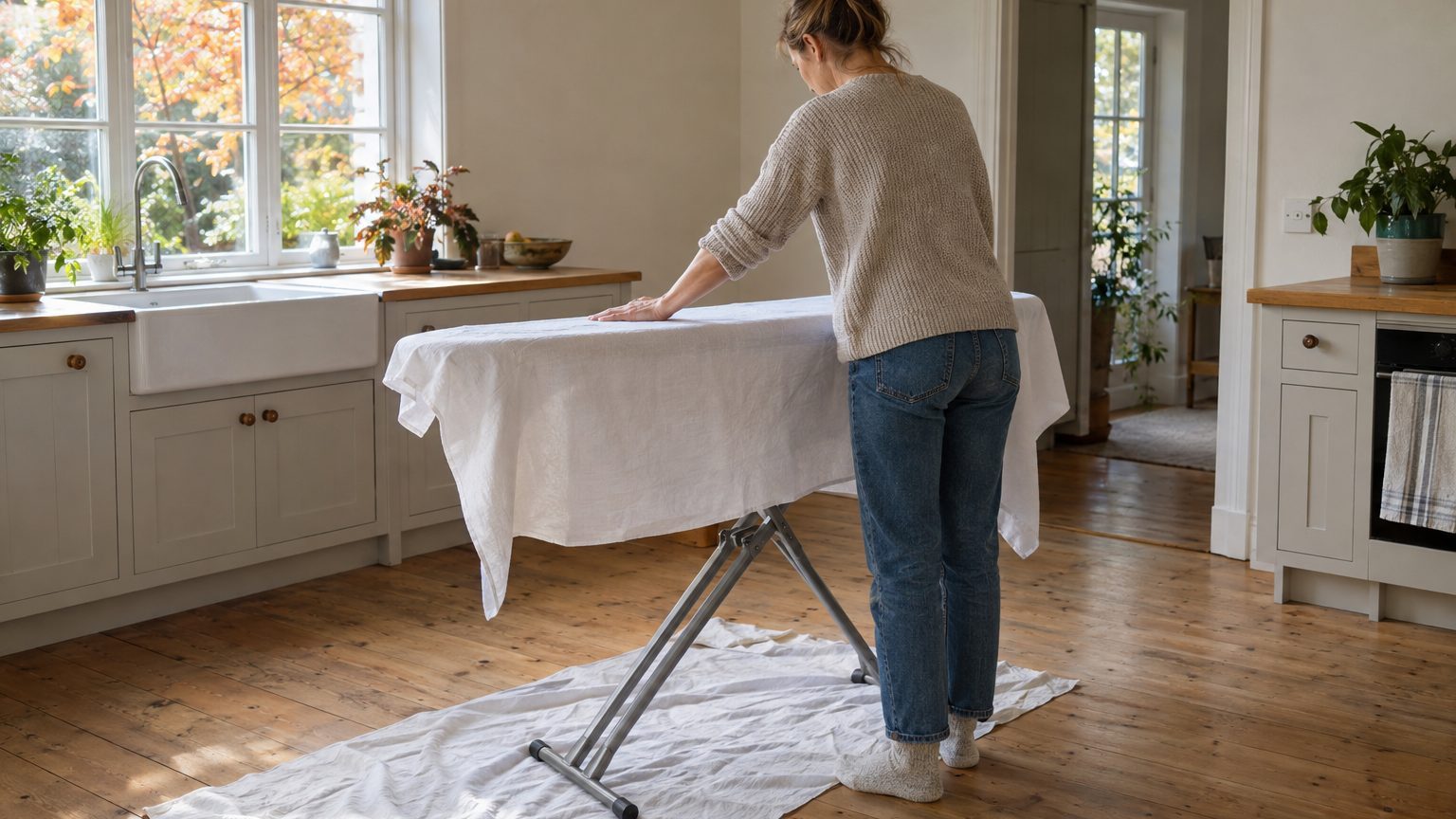
The surest way to get a flat Tablecloth is to iron it damp, on a surface big enough to hold its weight, with long strokes that never drag. Most false creases appear when the cloth slides off the board and folds under the iron. Get the setup right and the pressing itself goes quickly.
Start with the cloth, not the iron
The best moment to iron is while the cloth is still slightly damp from the wash, never soaking. If it has already dried, mist it lightly with a spray bottle before you begin.
Bone-dry cotton fights back.
Heat alone isn’t enough, because some materials, such as cotton, need water to loosen the bonds between their molecules. That is why a damp cloth gives up its creases in one pass, while a dry one just gets hot and shiny. Check the care label too, and make sure the cloth is clean before pressing, since heat can set a stain you hadn’t noticed. Wipe the soleplate as well, because a bit of residue will leave brown marks on white damask.
Then deal with the real problem, which is size. A 70 by 120 inch cloth will not behave on a standard board. A full-size board matters here, because a smaller one means constant repositioning, and that creates new creases as fast as you remove old ones. Spread a clean bedsheet on the floor underneath so the finished portion has somewhere clean to land, without picking up dust or re-creasing on a hard surface.
Iron in sections without chasing wrinkles
Begin with the edges and hems, which wrinkle most easily, then work inward with long, smooth strokes. Short, scrubbing motions do the opposite of what you want, since they push the fabric around and create new creases.
Feed the cloth through the way you would feed paper through a printer. Press one section, then fold it carefully over the end of the board so it doesn’t trail on the floor. Iron on the reverse side when you can, which helps protect the color and the surface finish. Seams and folded edges are the stubborn spots, since they hold creases more firmly than the main body of the cloth. Use the tip of the iron around corners and hems, with light pressure.
Never park the iron.
Fold lines left by weeks in a drawer are another matter. A burst of steam, or the iron hovering just above the fabric, can release deep wrinkles without direct contact. Creases from long storage may need two passes, so don’t press harder on the first one.
A brand-new cloth, still stiff from its packaging, responds to a different trick. Toss it in the dryer with a very damp dishcloth for about 15 minutes on high heat, as one home blogger suggests, then iron it right away while the fibers are warm and relaxed.
Match the heat to the fabric
Cotton and linen sit at the hot end of the dial. The cotton setting on most irons falls between 350°F and 400°F, and the three-dot symbol on the label caps out around 410°F. Linen tolerates the most heat, but treat that as a ceiling rather than a target. Industry guidance puts linen near 390°F (200°C) with the fabric still slightly damp.
Polyester is where people get burned, literally. It sits at the two-dot setting, capped at 160°C (320°F), and extension specialists at the University of Georgia advise low heat with steam, since polyester melts if it gets too hot. Banquet-style polyester cloths are often better off with a handheld steamer, which gives acceptable results without the risk of direct heat damage.
Decorated cloths need their own handling. Embroidered pieces go face down on a thick towel so the stitching stays raised, and printed ones get pressed on the reverse, because heat can crack or fade prints.
When in doubt, start low and work up.
Keep the finish after the iron cools
The minutes after ironing decide whether your work survives until dinner. Warm fabric remembers whatever position it is left in, so hang tablecloths immediately after steaming or ironing rather than folding them while they’re still warm. If a closet rod isn’t available, roll the cloth around a cardboard tube. A roll leaves no hard fold line, which makes it the better way to store a cloth between holidays.
Linen gives you a choice. Shake it out after washing, smooth it while damp, and let it air dry, and its own weight will release many creases. That relaxed look suits a casual brunch, but a formal dinner or sharper edges call for light ironing. Lighter wrinkles often vanish if you hang the cloth and let gravity work for a few hours.
One last tip for the hour before guests arrive. If creases appear after the cloth is on the table, spray them lightly with water and let them dry flat. A layer of felt under the cloth also hides the table’s edges and helps the drape fall straight.
Sources : blueflowerco.com | linenme.com