Freeze it, scrape it, melt what’s left into paper, then wash. That sequence works on most cotton and linen tablecloths, and it’s the answer to how to get candle wax out of a tablecloth without wrecking the fabric. The order matters more than any single trick.
- Freezing or chilling wax makes it brittle so it flakes off instead of smearing.
- Ironing between paper towels melts the remaining wax into the paper.
- Diluted rubbing alcohol or an oxygen bleach soak removes the colored dye left behind.
Start by doing nothing (for a few minutes)
Dinner is mid-course, a taper drips, and the instinct is to grab a napkin and wipe. Don’t. Wiping warm, soft wax only pushes it deeper into the fibers and spreads the stain.
Let it harden where it fell. Wax sets in a few minutes at room temperature, and a solid blob is far easier to manage than a smear.
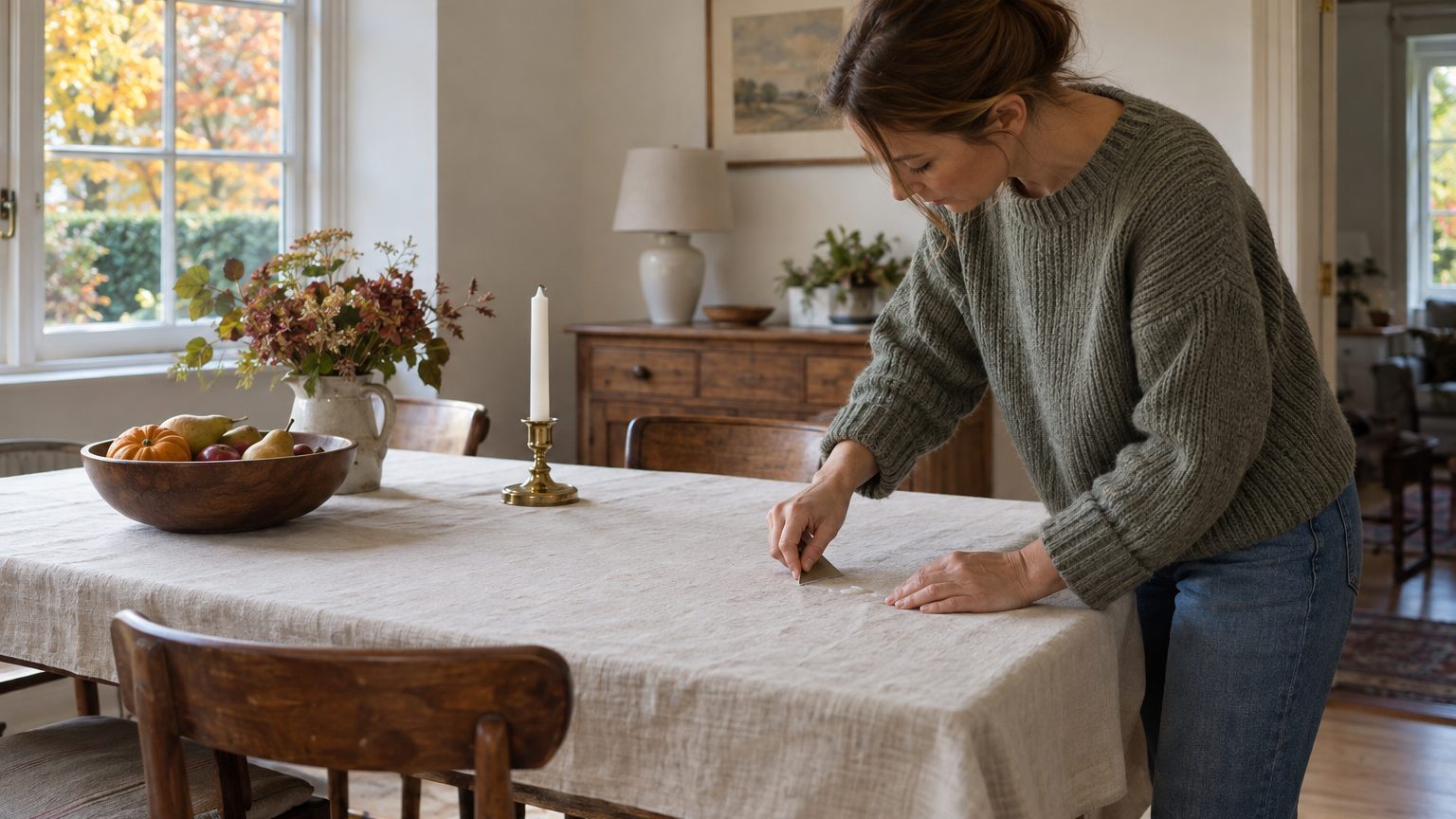
Once it’s firm, lift the bulk off. On smooth fabric you can usually pop hardened wax off with a fingernail, the edge of a credit card, or a dull kitchen knife. University extension guidance says the same: scrape the excess with a dull knife. Work from the outer edge toward the center so you don’t spread the wax outward.
Skip anything sharp.
A pointed blade will never dig out wax that has soaked into the weave, and it can cut a hole that is hard to repair. If the wax is stubborn, chill it first. Slide the tablecloth into the freezer (folded, if it fits) or place an ice cube in a plastic bag over the wax to harden it. Cold wax turns brittle and snaps off in flakes rather than grinding into powder.
Pull the rest out with heat and paper
Scraping never gets everything. Wax is oil-based and was liquid when it landed, so a thin film stays in the fibers, and it often looks like a faint, slightly darker patch. The fix is to melt that film and give it somewhere to go.
Lay the stained area between paper towels or plain brown paper (a cut-open grocery bag works) and press with a warm iron. University of Georgia extension advice is to place the stained fabric between white paper towels and press with a warm iron from the back of the fabric. Set the iron low and check the care label first, since a polyester blend will scorch long before cotton does. Putting an old towel under the whole stack protects your ironing board, and a stray drip is the usual way a board cover gets ruined.
Then watch the paper. As the wax melts it moves into the towel like oil into a wick, so replace the paper as the wax transfers and repeat until no more comes through. A stain that looked hopeless often takes four or five fresh sheets. Don’t rush the last couple of passes, because wax left behind will turn into a grayish, greasy mark after washing.
No iron on hand? Boiling water works on sturdy fabrics. Stretch the stained section tightly over a large bowl, secure it with rubber bands, then pour boiling water over the wax to melt it. A hair dryer on medium heat can also soften the wax enough to blot it into paper towels, though it’s slower and messier.
Wash, then deal with the color
When the paper comes away clean, launder the tablecloth following its care label. Skip the dryer until you’ve checked the spot, because heat will set any wax or dye you missed. Hanging the cloth to air-dry lets you inspect it in daylight and repeat the iron step if a ghost of the stain remains.
Colored candles leave a second problem behind: pigment. Red and burgundy holiday candles are the worst offenders, and they can leave a pink or tan halo even after every trace of wax is gone.
For that halo, extension guidance suggests that if a dye stain remains from the wax, you sponge it with alcohol diluted with two parts water. On white or colorfast cotton, an oxygen bleach soak is gentler. Mix oxygen bleach powder with warm water per the label, submerge the fabric, and soak at least four hours or overnight before laundering. Test any of these on a hem or corner first, particularly on printed or dyed cloth.
Here is how the methods compare on a typical cotton or linen cloth:
- Small drips: freeze, flick off, then wash. Often that’s all it takes.
- Soaked-in patches: iron between paper towels, replacing them until they stay clean.
- Delicate or large areas: boiling water over a bowl, if the fabric tolerates it.
- Colored wax residue: diluted rubbing alcohol or an oxygen bleach soak.
Know when to stop and what to avoid
Not every cloth should go near an iron. Silk, velvet, and anything labeled dry-clean only are better handled by a professional, since upright fibers like velvet trap wax and flatten under pressure. Lace and heirloom linens fall in the same category. Scrape off what you can gently, bring it in quickly, and point out exactly where the wax landed.
Oil-based shortcuts circulate online. Rubbing vegetable oil into small wax spots does work for some people, and one home-tips writer reported success on a red Christmas tablecloth. But oil adds a grease stain of its own that then needs dish soap or a pretreater, so I’d keep it as a backup.
Prevention Costs Almost Nothing. Set candles in holders with a wide base or a drip catcher, trim wicks to about a quarter inch so the flame stays steady, and keep them out of drafts, which make candles drip and flicker. A glass hurricane or a plate under a taper turns most spills into someone else’s problem.
One more detail for the next dinner party: lay a sheet of parchment under the candlesticks before guests arrive. Wax lifts off parchment cleanly, and nobody has to find out how good your ironing skills are.
Sources : fcdrycleaners.com | simplytablecloths.co.uk