Tarnish isn’t dirt. It’s a chemical reaction. Silver tarnishes quickly because of sulfur in the air, and the result is a film of silver sulfide, the gray-to-black haze on your grandmother’s forks. The good news is that the reaction can be reversed with ingredients from your pantry, and a full set of flatware can be done in about 15 minutes. Knowing how to clean silverware safely depends on what you’re holding, though.
So first, identify your metal.
- Tarnish is a film of silver sulfide formed by sulfur in the air.
- Sterling is 92.5% silver and 7.5% copper, and it tarnishes faster than pure silver.
- A foil and boiling baking soda soak reverses tarnish in about 10 minutes.
Know what you own before you start
Sterling is an alloy of 92.5% silver and 7.5% copper, and that copper matters: sterling tarnishes faster than the pure silver on a silver-plated object because of the copper in the alloy. Flip a fork over and look for a hallmark such as “sterling” or “925.” Silverplate is a thin layer of silver over a base metal, and it won’t forgive heavy scrubbing. Conservators point out that any abrasive polishing removes a small amount of silver, which is why gentle methods win.
Handles deserve a second look. Ivory or wooden handles should be protected from any water or cleaning solution. Hollow-handled knives are another trouble spot, because the filling inside can loosen in a hot soak (a common warning from silver makers), so polish those by hand.
Then there’s the dark lettering in your pattern. Those shadowed recesses in engraved or embossed designs are often intentional, and over-cleaning flattens the look. Silver dips, used carelessly, will over-clean silver with chased, engraved or embossed decoration. Many commercial polishes add a second problem: they usually contain ammonia, which dissolves copper, whether that copper sits in sterling or beneath plating.
The foil-and-baking-soda soak for plain flatware
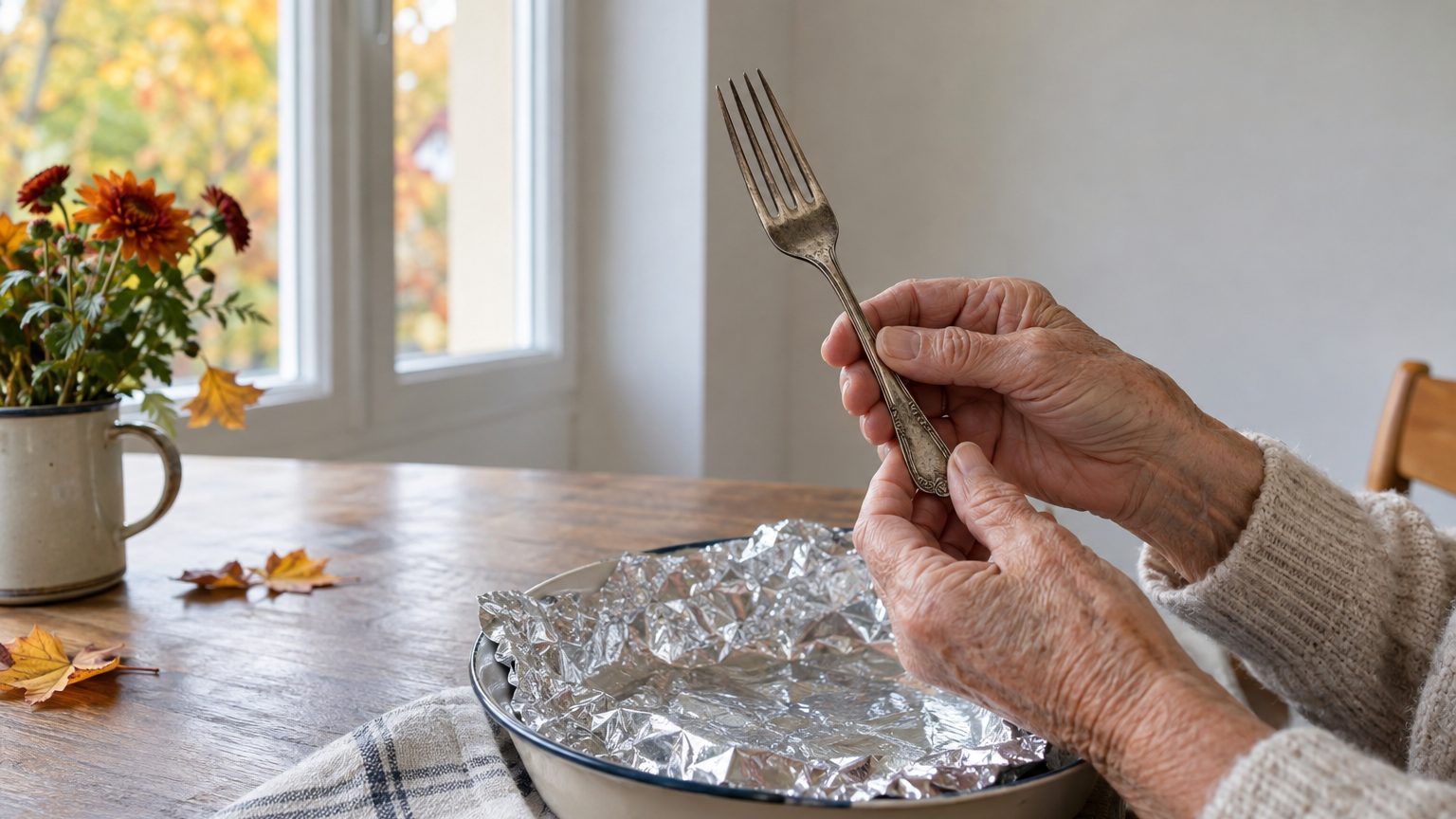
This is the method for a drawer of dull spoons. Line a glass dish, a pot or even a clean sink with aluminum foil, shiny side up.
Lay the pieces in a single layer so each one touches the foil. Then pour over boiling water mixed With Baking Soda, about one tablespoon per cup of water. Contact is the whole trick, because touching the aluminum is what makes the chemical reaction happen. Most batches need roughly 10 minutes, longer if the silver is badly tarnished.
What you’re watching is a small battery. Aluminum has a stronger pull on sulfur than silver does, so the silver sulfide turns back into silver while the sulfur moves to the aluminum, and the baking soda acts as a conductor in the water. A university chemistry demonstration uses the same setup, with foil, salt, baking soda and boiling water. Expect a faint sulfur smell, so crack a window.
Use tongs. The water is boiling.
Rinse each piece and dry it right away with a soft cloth. The result is bright, sometimes startlingly so, and it strips tarnish from the crevices along with the surface. That suits a plain set of everyday forks. It’s a poor choice for ornate serving pieces where you want the pattern’s depth to show.
Paste and cloth for pieces that need a lighter hand
For a candlestick or a gravy boat, mix a paste of three parts baking soda to one part water. Rub it on with a soft cloth or sponge. Lightly tarnished silver needs about 30 seconds of contact, while heavy tarnish can take up to 10 minutes. Rinse thoroughly and buff dry.
Pressure is where people go wrong. Vigorous cleaning can scratch the surface or remove plating, so let the paste do the work.
For monthly touch-ups, a treated polishing cloth is the better tool. Wipe, flip to a clean section, wipe again. Museums handle serious tarnish with a fine slurry of precipitated calcium carbonate, an abrasive of uniform particle size, which tells you something. Even the professionals prefer the mildest option that works. At home, that usually means a cloth first, paste second, and the foil soak only when a set has gone properly gray.
Keeping it bright through the seasons
Tarnish speeds up when the air is damp. Conservators suggest keeping silver where relative humidity stays consistently below 50 percent, which rules out a sideboard against a steamy kitchen wall in August. Silver that comes out only for holidays should be cleaned in early November, not an hour before guests arrive. Once it’s polished, store it wrapped in acid-free tissue, followed by a tarnish-preventing cloth or paper.
Keep anti-tarnish strips from touching the metal itself. Tissue paper acts as a buffer between the silver and the strip.
Daily habits help too. Egg yolk, mayonnaise, onions and salty dishes are known to speed up spotting, so rinse silver soon after the meal rather than letting it sit overnight. Many silver makers also advise hand washing, since dishwasher detergents can leave a dull, chalky finish. Dry with a soft towel and put the set away.
One last point for anyone tempted to polish weekly. Tarnish itself contains silver, so every removal takes a little of the metal with it, and museum guidance warns that each polishing takes away some underlying silver along with the tarnish. Flatware that gets used and washed regularly tends to stay brighter anyway, which makes the dinner table the cheapest polish you’ll ever find.
Sources : cronista.com | thehowtohome.com