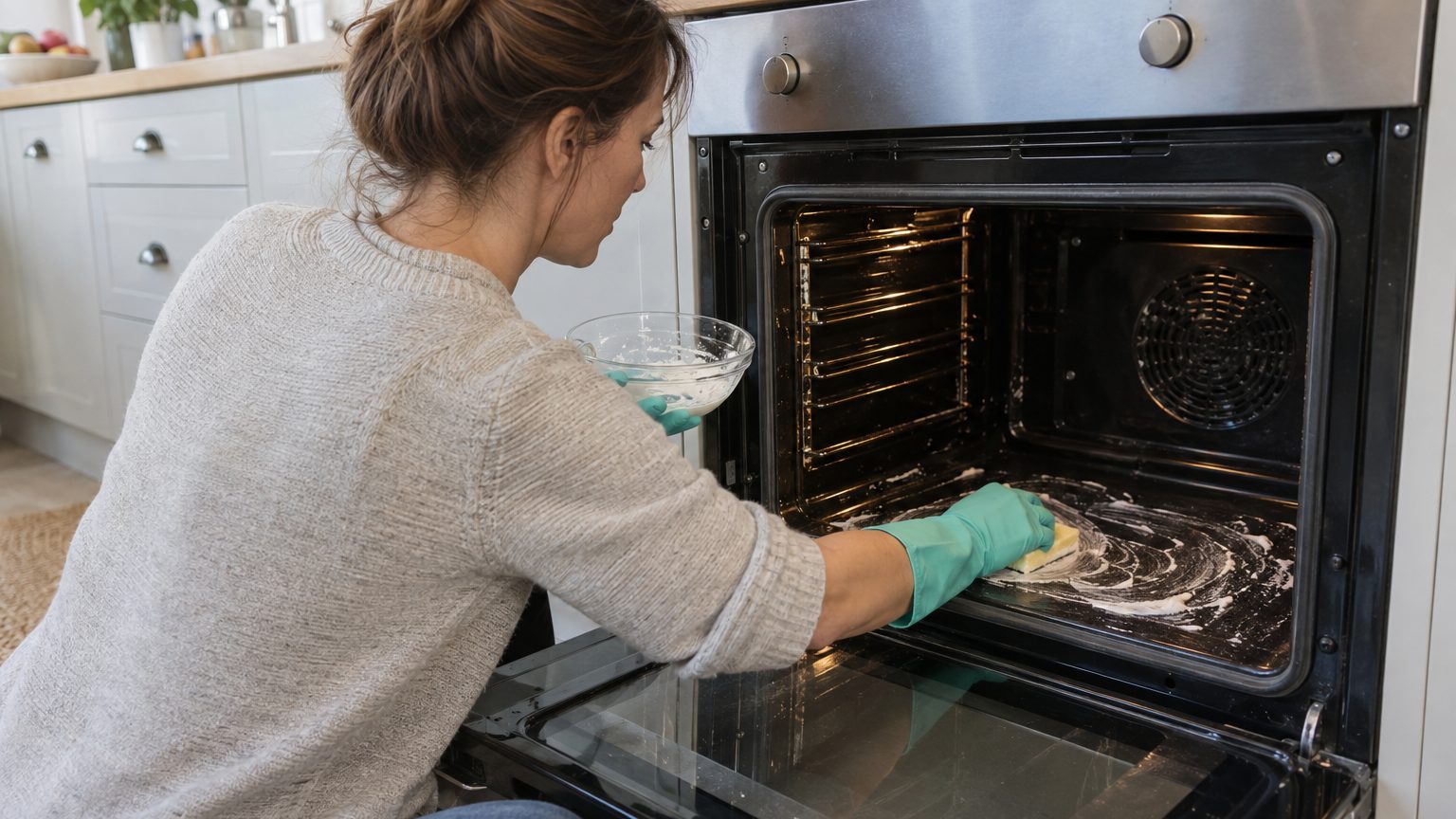
Half a cup of baking soda, a few tablespoons of water and a night of patience: that is the whole recipe for how to clean oven with baking soda. No harsh fumes, no open windows in November, no scrubbing with a respirator on. The result won’t look showroom-new, but it will be clean enough to roast a turkey in.
Plan for a full night, not a quick wipe.
- A paste of baking soda and water left overnight loosens baked-on grime.
- Vinegar spray dissolves leftover residue so it wipes away easily.
- Oven racks soak clean in a bathtub with baking soda, vinegar and hot water.
Why the self-clean cycle is a risky bet before Thanksgiving
A self-cleaning oven works by heating itself to somewhere between 800 and 1,000°F, which turns spills into ash. Plenty of people run the cycle right before a big holiday. Appliance repair technicians say that’s the worst timing, because the extreme heat can blow a fuse or damage components. Finding someone to fix an oven in the days before Thanksgiving is a gamble you don’t want to take with a 20-pound bird waiting in the fridge.
Then there are the fumes. Burning off food residue and the enamel lining can release smoke and odors, and the cycle can also produce carbon monoxide, though experts disagree on how much. Pet birds are the most vulnerable, since their respiratory systems are extremely sensitive, and some manufacturers advise moving them well away from the kitchen.
A baking soda paste carries none of that baggage.
Grease deserves its own mention. Old drips and crumbs are more than an eyesore, since built-up residue is a genuine fire hazard, and cleaning every few months is a sensible rhythm. A turkey drips, and a floor coated in last year’s grease is where smoke alarms get their workout.
The method, step by step
Start with a cool, empty oven. Pull out the racks and any pizza stones or thermometers, then brush or wipe out loose crumbs from the bottom. Put on rubber gloves, because the paste is gritty and the grime under your nails is not.
Mix 1/2 cup of baking soda with a few tablespoons of water in a small bowl. One tester needed about three tablespoons to get there, and a ratio of roughly three parts baking soda to one part water is a good target. You want a spreadable paste, closer to frosting than soup. Spread it over the interior surfaces with your gloved hand or a brush, including the inside of the door, but keep it away from the heating elements. Don’t worry if it turns brownish as you rub it in or looks lumpy in places.
Now close the door and leave it for at least 12 hours. Overnight is the easy way to do it. Tape a note to the door so nobody preheats the oven for a midnight snack.
In the morning, take a damp cloth and wipe out as much of the dried paste as you can. A plastic or silicone spatula helps in corners and along the door seal, and unlike metal scrapers it won’t scratch the enamel. The cloth will get gunky quickly, so rinse it often.
The vinegar step is what makes the cleanup bearable.
Fill a spray bottle with white vinegar (some people dilute it with equal parts water) and mist the leftover residue. The mixture fizzes and thins out, and stubborn baking soda that wouldn’t budge with a cloth often dissolves enough to wipe away. One tester called the vinegar spray the part that made everything easier. Finish with a cloth rinsed in clean water, then a dry one.
The glass door gets the same treatment, with a soft brush and a drop of dish soap for baked-on streaks. Don’t skip it: a clear window means you can check the pie without opening the door and losing heat.
Racks, stubborn spots and the calendar
Oven racks are usually the worst offenders, and the bathtub is the best tool for them. Lay a towel on the tub floor so the racks don’t scratch it, sprinkle them with baking soda, and spritz with vinegar. Once the bubbling settles, add enough hot water to cover them and walk away for a few hours or overnight. A cloth or a scrubbing pad finishes the job, and baking sheets with burnt-on residue respond to the same soak.
Some spots will survive round one, particularly the carbonized patches under the broiler or around the door hinge. Repeat the paste on those areas only and give it another overnight. A more aggressive version that circulates online combines 1/2 cup of dish soap, 1-1/2 cups of baking soda and 1/4 cup of vinegar into a thick scrub, applied with a sponge and left overnight. It works through the same chemistry, just with soap helping to cut the grease.
Thanksgiving falls on November 26 this year, which makes the weekend of November 14 and 15 a smart window. That leaves a buffer for a second round if the first one doesn’t finish the job, and time for any vinegar smell to clear. Cleaning the oven the night before the big cook is the mistake to avoid, because nobody wants to discover a pocket of baking soda paste at 6 a.m. with the turkey already prepped.
One caveat before you start: check your oven’s manual. Some models have special coatings or specific guidance on abrasive products, and manufacturers generally want you to consult the manual before using any harsh cleaner inside. Baking soda is mild, but a two-minute look at the instructions costs nothing, and it settles whether your door gasket needs to stay clear of the paste.
Sources : realhomes.com | familyhandyman.com