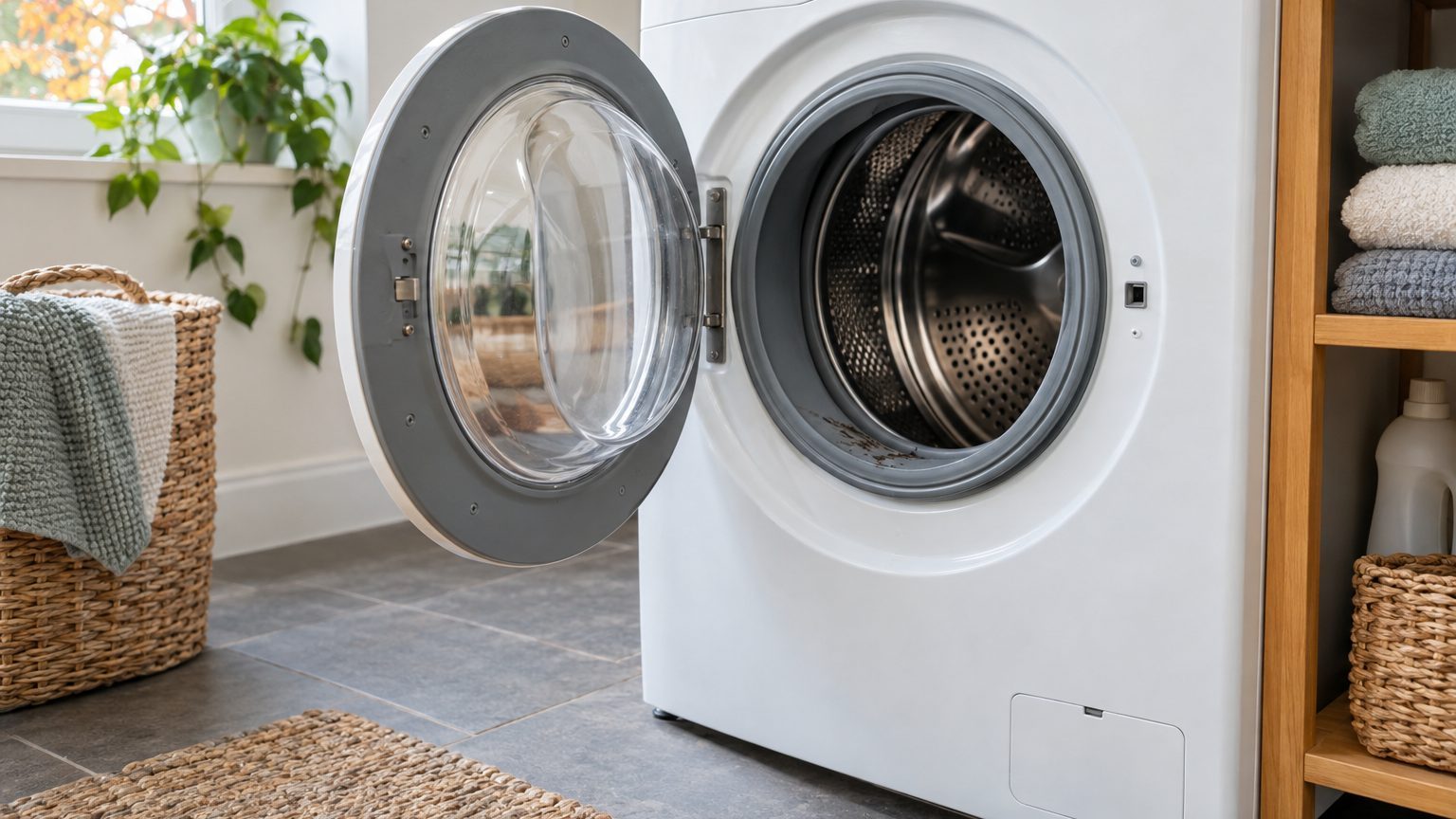
That gray rubber ring around your front-load washer door, the gasket, is the #1 place black gunk and mold settle in and come back.
Front-loaders seal tightly to save water and energy, but that same airtight design traps moisture in the folds of the gasket. Add a little detergent residue and lint, and you’ve basically created a snack bar for mold. Result? Odor on “clean” towels, speckled rubber, and that nagging worry that you’re washing clothes in a petri dish.
Black mold on a washer gasket isn’t a personality flaw. It’s physics.
Before you attack it with random sprays, know what you’re dealing with. The dark spots on gaskets are often mildew or mold feeding on soap scum, body oils, and fabric softener residue, and the staining can linger even after the living growth is gone. The bigger risk is repeated exposure in a damp laundry nook, especially for anyone with asthma or mold sensitivity.
Why the gasket gets gross (and why it keeps coming back)
Start with the design: the gasket has multiple channels and folds so it can flex, seal, and keep water from leaking at high spin. Those folds hold puddles, hair, and that lonely bobby pin, and they can stay wet for hours after a cycle. If your laundry area is cool or poorly ventilated, drying slows down even more.
Detergent habits matter more than most people think.
High-efficiency washers need less soap than older top-loaders, yet overdosing is common, especially with concentrated liquids and “scent booster” beads. Excess detergent doesn’t rinse clean; it clings to the gasket and becomes residue that traps dirt. Fabric softener can add a waxy layer that holds onto grime, which is why washers used for gym clothes and towels often develop funk faster.
Temperature plays a role, too. Cold washes save energy and can protect fabrics, but they don’t dissolve oils as well as warm water, and they don’t discourage microbial growth the way hotter cycles can. Many households now run mostly cold cycles, then wonder why the seal smells like a damp basement.
What you need (and what to avoid)
Gather supplies first so you’re not holding the washer door open with one hip while hunting for gloves. You want friction (scrubbing), a cleaner that breaks down biofilm, and a way to rinse and dry thoroughly. Keep it simple, because complicated routines don’t stick.
- Rubber gloves and a few microfiber cloths
- An old toothbrush or small nylon cleaning brush
- Household bleach or 3% hydrogen peroxide or oxygen bleach (choose one approach)
- A spray bottle (if your product isn’t already in one)
- Paper towels or a dry cloth for the final wipe
Never mix bleach with vinegar or ammonia.
That’s not “extra cleaning power”; it can create dangerous gases. If you like vinegar for descaling, save it for a separate session, fully rinsed in between. For mold on rubber, stick to one disinfecting chemistry at a time and give it the contact time it needs.
Bleach is effective against mold on hard, nonporous surfaces, but rubber gaskets sit in a gray area: they’re flexible and can be slightly porous, and bleach can accelerate cracking over time if overused. Hydrogen peroxide is another option many people tolerate better indoors, and oxygen bleach is good for deodorizing and general cleaning, though it may be slower on heavy growth.
If you want a safety reference, the EPA’s guidance on mold cleanup emphasizes controlling moisture and using appropriate protection, because cleanup without drying just resets the clock. See https://www.epa.gov/mold.
Step-by-step: deep-clean the gasket and remove black mold
First, ventilate. Open a window, run the bathroom fan if your laundry is nearby, and keep kids and pets out of the space. Put on gloves, and grab a flashlight if your laundry room lighting is more “moody” than useful.
Unplugging the washer isn’t mandatory, but it’s smart if you’ll be reaching near controls or using lots of liquid. Then pull back the gasket folds and remove debris by hand, hair, coins, and the occasional sock, so you’re not smearing grime around. Wipe the loose dirt with a damp cloth before you apply any disinfectant.
Those folds hide the worst of it.
Now choose your cleaner route and commit to it for this session. If you’re using bleach, dilute it with water (follow the label directions; concentrations vary) and apply it to a cloth or paper towel rather than dumping it straight into the gasket channel. Press the dampened towel into the fold like a compress, because contact time is where the work happens, and let it sit for about 10 minutes.
Hydrogen peroxide works similarly: spray 3% peroxide onto the affected areas, wait 10 minutes, then scrub. It tends to foam slightly as it reacts, which helps you see coverage, and it’s less likely to discolor surrounding plastics. For oxygen bleach, dissolve it in warm water per label directions, apply, let it dwell, then scrub.
Scrub with a toothbrush or nylon brush, focusing on the seam lines and the underside of the fold where staining starts. Use short, firm strokes, then wipe away the loosened residue with a clean damp cloth. Reapply and repeat on stubborn spots, because thick biofilm often needs two passes.
Rinse like you mean it.
After scrubbing, wipe the gasket several times with clean water on a cloth until you don’t see suds, grime, or cleaner smell transferring. Any leftover chemical can irritate skin and attract more dirt later, which is the opposite of what you want on a part that touches every load of laundry. Finish by drying the gasket completely, including inside the folds, using a dry cloth or paper towels.
Run a “clean washer” or hot cycle next. If your machine has a dedicated tub-clean program, use it; those cycles are designed to sustain heat and flushing. Otherwise, run the hottest long cycle with the washer empty, and use a washer cleaner product if you have one, following the package directions, because too much chemistry can create its own residue problem.
If the mold keeps returning: check the drain holes
At the bottom of many gaskets are small drain ports that let water escape back into the tub. If those ports are clogged with lint or sludge, water pools in the seal and mold comes back fast. Clear debris gently with a cotton swab or soft brush, and avoid poking hard with anything sharp that could tear rubber.
Keeping it clean “for good” is mostly about drying
Leave the washer door ajar between loads, even just an inch. This one habit changes the humidity inside the drum and around the gasket, and it costs nothing. If you hate the look of an open door, make it part of your laundry room “reset,” like putting detergent away and wiping the counter.
Wipe the gasket weekly in 20 seconds.
A quick dry cloth pass around the seal, plus a fast swipe inside the bottom fold, prevents standing water from becoming a recurring science project. Keep one dedicated microfiber cloth in the laundry area so you’re not hunting for supplies. Three months of consistency beats one heroic Saturday clean.
Dial back detergent, and measure it. Many HE detergents are concentrated; using a little less often cleans just as well and leaves less residue behind, especially in soft water. If your towels feel waxy or your athletic clothes hold odor, consider skipping liquid softener for a few weeks and see if the gasket stays cleaner.
Heat has its place, even if you love cold cycles. Running a hot wash periodically, or at least a monthly cleaning cycle, helps break down oils and discourages growth in the drum and seal area. If you’re concerned about energy use, think of it like cleaning an oven: occasional higher heat can prevent bigger, nastier problems later.
Humidity in the laundry space counts, too, and this is where home life sneaks in. A front-loader parked in a basement next to a utility sink and a damp dehumidifier bucket is basically living in a swampy neighborhood. If you already run a dehumidifier for comfort, keeping the room closer to 50% relative humidity can make gasket funk less likely to return.
Stains may remain even after disinfection.
That’s a frustrating truth: black spotting can “ghost” in the rubber once the growth is gone. If the odor is gone, the surface wipes clean, and you’re maintaining drying habits, you may be looking at cosmetic staining rather than active mold. A persistent musty smell, slimy residue, or recurring specks after cleaning usually means moisture is still trapped or detergent buildup is still feeding the problem.
One last practical nuance: if the gasket is torn, warped, or no longer sealing, it can hold water in new ways and keep molding no matter how diligent you are. At that point, cleaning becomes a treadmill, and having the gasket inspected or replaced can be the more hygienic, less exhausting path for a laundry room you actually want to use.