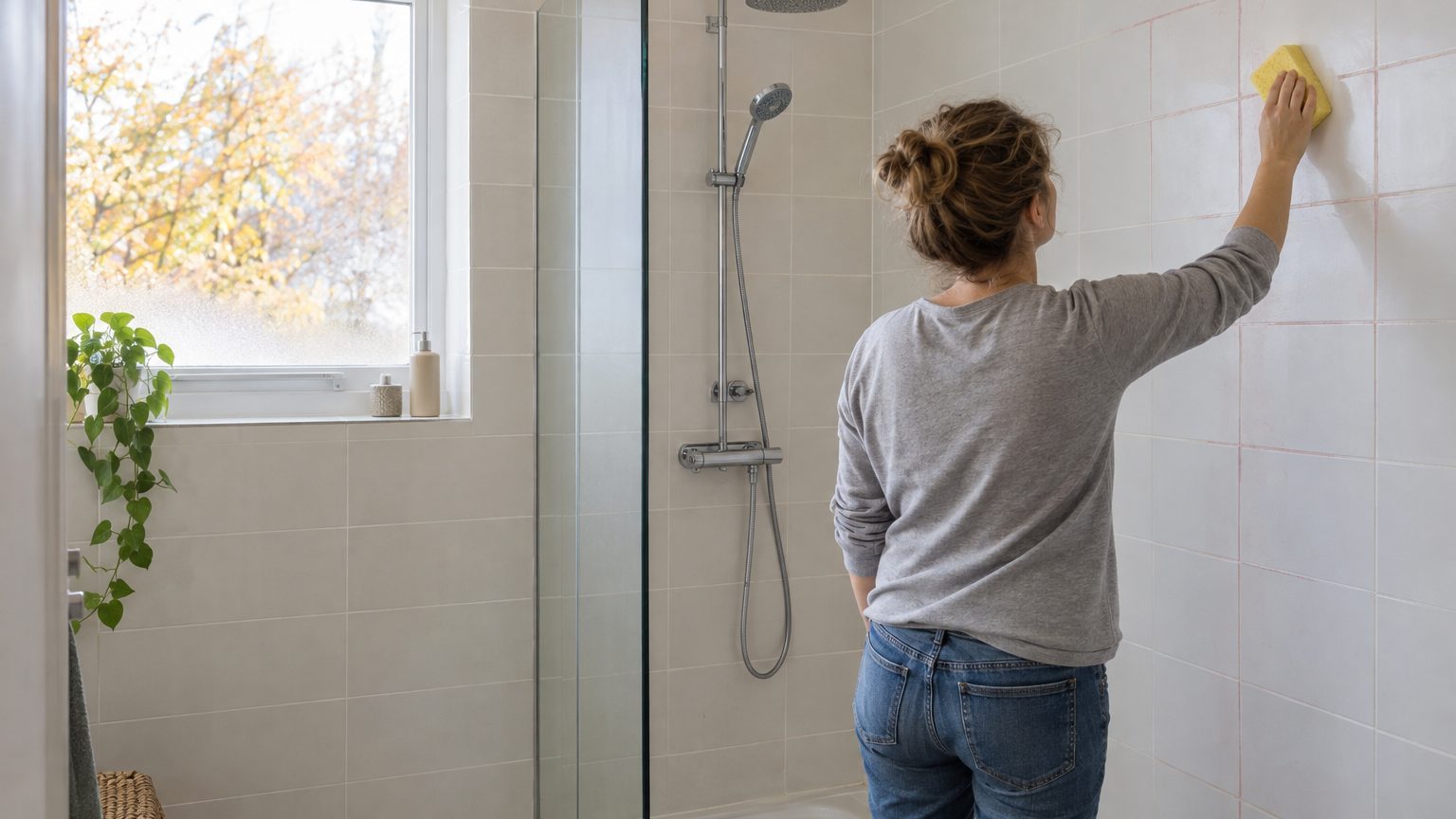
That pink film creeping along the grout line is not mold. It is a bacterium, most often Serratia marcescens, and it feeds on the soap residue and body oils your shower leaves behind.
What you’re actually looking at
Serratia is a reddish-orange pigment producer found in soil, water, and dust, so it is already in your house. Bathrooms give it everything it wants: constant moisture, moderate warmth, and a steady supply of fatty residues from shampoo, body wash, and skin. It shows up as a slimy pink, salmon, or orange film on shower curtains, tile corners, caulk, and the rim of the toilet bowl.
Calling it “pink mold” is understandable, since it blooms in the same places true mold does. The difference matters for cleanup, though. Mold is a fungus that can root into porous materials, while Serratia mostly sits on the surface as a biofilm.
Should you worry? Somewhat.
Serratia marcescens is an opportunistic pathogen. Healthy adults rarely have trouble, but it has been linked to urinary tract, wound, and respiratory infections, mostly in hospital settings and in people with weakened immune systems. If an infant, an elderly relative, or someone immunocompromised uses your bathroom, treat the pink film as a reason to clean promptly rather than a cosmetic quirk. The CDC notes that biofilms in damp environments can harbor bacteria, which is one reason regular cleaning matters.
Getting it off, step by step
Start with the plainest tools. A bathroom cleaner with a surfactant, a stiff nylon brush, and ten minutes of effort will lift most fresh growth. Biofilm is sticky, so scrubbing does more than any soak. Spraying and walking away tends to disappoint.
For grout and caulk lines, disinfecting follows scrubbing. A diluted bleach solution (the EPA-registered disinfectant labels typically call for roughly a quarter cup of household bleach per gallon of water, though you should follow your product’s own directions) left on the surface for the stated contact time kills what remains. Hydrogen peroxide at 3 percent is a gentler option, and it works well on grout and fixtures without the fumes. Rinse well afterward.
Never mix bleach with ammonia or acidic cleaners such as vinegar.
The combination releases toxic gases, and bathrooms are small, poorly ventilated rooms where that goes wrong fast. Pick one product, use it, rinse, and only then reach for another. Open the door or run the fan throughout.
Shower curtains and liners deserve their own attention. Most plastic liners can go through the washing machine on a gentle cycle with a few towels acting as scrubbers, then hang to dry. If the pink has stained deep into the material or the liner is more than a year or two old, replacement costs less than the time you will spend fighting it. Fabric curtains can be laundered hot, following the care label.
Caulk is the stubborn case. Because it is porous and slightly textured, the pigment can lodge below the surface, and once a bead stays stained after a proper scrub and disinfecting, the practical answer is to cut it out and re-caulk with a mildew-resistant silicone. It is a one-afternoon job, and cured silicone gives the bacteria far less to grip.
Why it keeps coming back
Cleaning without changing the conditions is a treadmill. Serratia can regrow within days if the surface stays wet and coated in residue. Many people scrub the pink away on Saturday and find it back by the following weekend.
Ventilation is the first lever. Run the exhaust fan during every shower and for at least 20 to 30 minutes afterward, or leave the door open if your fan is weak. Building guidance from the EPA on moisture control points to the same principle: keep indoor humidity below roughly 50 percent and dry wet surfaces within 24 to 48 hours. A cheap hygrometer, often under $15, tells you whether your bathroom is clearing out or staying soupy.
Residue is the second lever, and it is the one people overlook. Bar soap leaves a fatty scum that is basically a meal for the bacteria. Switching to liquid body wash, rinsing walls and tile at the end of a shower, and wiping surfaces with a squeegee for thirty seconds removes both the water and the food.
Cold weather makes the problem worse in some homes. Closed windows and shorter ventilation habits in winter trap moisture, and showers run hotter, pushing more steam into a room that never fully dries. This is when a bathroom that was fine in July suddenly blooms in January.
A few small habits cover most of the ground:
- Squeegee or towel down walls and glass after each shower.
- Hang the curtain fully open so it dries flat instead of bunching.
- Move shampoo bottles and loofahs off the tub floor, since they trap standing water.
- Spray a daily shower cleaner once a week on corners and the tub edge.
Loofahs and bath sponges are a frequent hidden reservoir. They stay damp, they collect skin cells, and they get reused for weeks. Replace them every month or so, or swap to a quick-drying silicone brush you can wash easily.
One more detail: the pink ring that appears in toilet bowls and pet water dishes is the same organism. If it shows up in other spots in the house, the cause is the same damp, residue-rich environment, and the same cleaning and drying habits apply.
When the stain is not pink at all but black, green, or fuzzy, you are likely dealing with real mold, and the stakes change. Patches larger than about 10 square feet, growth inside walls, or anything that returns after repeated cleaning point to a moisture problem (a leak, failed waterproofing) that cleaner alone cannot fix. In that case, find the water source first.