Cotton and synthetic fabrics such as polyester and rayon are rarely attacked by moths unless they are blended with wool or heavily soiled with food stains or body oils. That fact changes how to store summer clothes. Your tank tops are less at risk than your habits are. Damp, dirty or tightly sealed, they come out in spring yellowed, musty or holey.
Most of the damage is decided before the lid goes on.
- Clothes moth larvae prefer fabric soiled with sweat, food or body oil.
- Storage humidity should stay between 45% and 55%.
- Eastern red cedar kills only small clothes moth larvae.
- Freezing below 18°F controls clothes moths.
Wash first, even what looks clean
A T-shirt worn once to a July cookout looks fine. It still carries sweat, sunscreen, a trace of barbecue sauce and maybe perfume. Clothes moth larvae feed on animal fibers like wool, and they much prefer fabric soiled with food, sweat or body oil. The cotton may survive, but the silk scarf, the linen-wool blend shorts and the cashmere wrap you carried on cool evenings are the pieces larvae go for.
University extension services say insects are less likely to feed on clean fabric than on dirty fabric. So Everything gets laundered or dry-cleaned, with no exceptions for “barely worn.” Stains matter too. Invisible ones, like sugary drinks or deodorant residue, oxidize over months and show up as brown or yellow patches next fall.
Then comes the step people rush. Dry means completely dry, which for thick fabrics like denim, hoodies and beach cover-ups can mean an extra day on the line. A garment folded while slightly damp is a mildew starter kit, and no container can fix that afterward.
Dry-cleaned pieces need one more move. Pull them out of the thin plastic bag the cleaner puts them in, because plastic bags can trap moisture and restrict airflow, leading to mildew or fabric deterioration. Cotton garment bags work better for delicate dresses.
Choose a spot and a container that won’t sweat
Humidity is the quiet enemy here. One storage guide recommends a humidity level of around 45% to 55%, which is roughly what a comfortable bedroom feels like. Above that range, clothing is prone to developing mold, mildew, and rust on zippers or hooks. That explains why metal-buttoned shorts are the first to go wrong in a damp room.
Location matters as much as the box. A pest-control brand’s guidance says to store clothing in a cool, dark, well-ventilated, dry area and to avoid garages, basements and attics. The space under a bed, the top shelf of a bedroom closet or a dresser drawer you stop using in November all beat the basement. Temperature swings in a garage can leave condensation inside even a well-sealed bin.
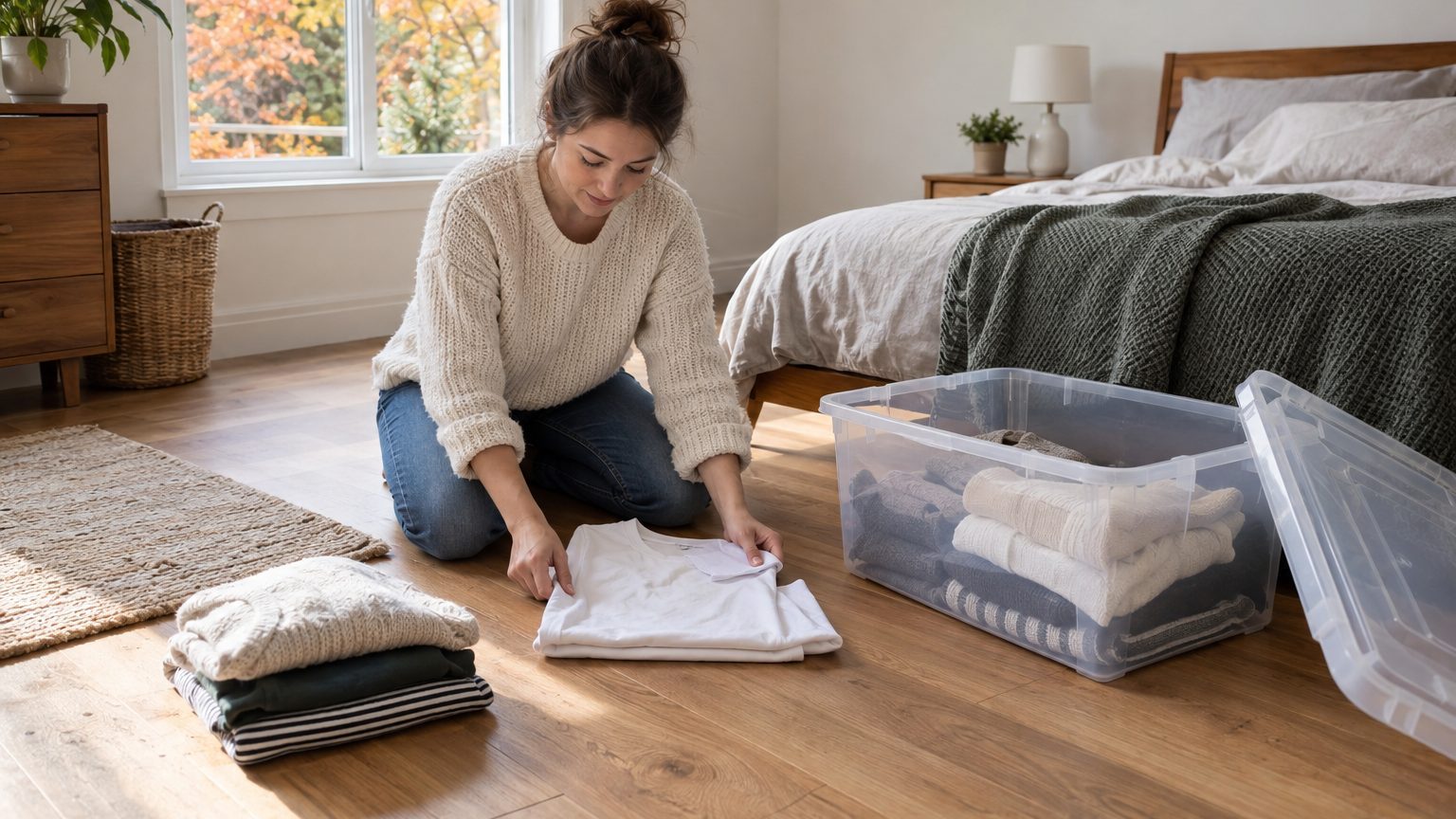
For containers, lidded plastic bins are a solid choice for clean, dry cotton, shorts and jeans. Bins suit excess tees and shorts, and silica gel sachets help prevent moisture from developing mold. Skip cardboard, which can absorb moisture and attract pests. Pack loosely, with heavier items at the bottom and light ones on top.
Vacuum bags save space, but they are not for Everything. They suit bulky, sturdy items, while wool and cashmere fibers can be damaged by heavy compression. Breathable cotton bags are safer for anything delicate.
Silica gel is cheap insurance.
A New York organizer quoted by Time Out recommends silica-gel desiccant packs to absorb moisture that can damage clothes. Tuck one or two into each bin, and keep them away from small children and pets.
Moth defenses: what works and what doesn’t
Cedar is the classic answer, and the reality is less tidy than the marketing. A University of Florida extension publication says Eastern red cedar contains an oil that kills only small larvae, with no effect on large clothes moth larvae. The same source adds that clothing bags, cedar closets and cedar chests only protect when stored materials are free from infestation. Cedar is a backup, not a cure.
It also fades. Replace cedar every few years or sand it lightly to refresh the scent. Dried lavender, rosemary, mint, thyme or cloves in small sachets are the other common deterrents. Whichever you pick, slip it into a sock or sachet rather than laying it directly against fabric.
Mothballs deserve a warning label of their own.
Mothballs are pesticides designed to kill clothes moths and other fabric pests, and in the U.S. they are regulated by the Environmental Protection Agency. The University of Maryland Extension treats them as a last resort, to be used only in sealed containers. It also advises avoiding products made of paradichlorobenzene, which it describes as more toxic than naphthalene. For a stack of summer cotton, you almost certainly don’t need them.
If you do find larvae, or silky webbing, or small holes in a wool-blend piece, the freezer is the chemical-free fix. University extension guidance says clothes moths can be controlled in a freezer below 18°F, with recommendations ranging from a day to several days. Seal the item in a zip-top bag first, and let it come to room temperature inside the sealed bag, so condensation forms on the bag and not the wool.
Check in before spring, not after
Moths like dark places nobody visits. Stillness is the enemy of a moth-free closet, as one pest-control guide puts it, and a bin untouched from September to May fits that description perfectly. A quick look every month or two (ten minutes every few weeks, by one outdoor-clothing maker’s estimate) is enough to catch a problem early.
Open one bin per visit. Shake out a piece or two, look along seams and folds for webbing or tiny cases, and check that the silica gel packs haven’t gone saturated. Re-fold along different lines so creases don’t set permanently.
Label each bin by contents and the date you sealed it. Come April, you’ll skip the guessing game of opening five boxes to find one swimsuit.
One caution on traps. Pheromone traps are sold for clothes moths, but they trap the male moths, so they work as an early warning, not as a cure. If one catches moths, go back to your bins and start checking.
Sources : confessionsofanover-workedmom.com | theellediaries.com