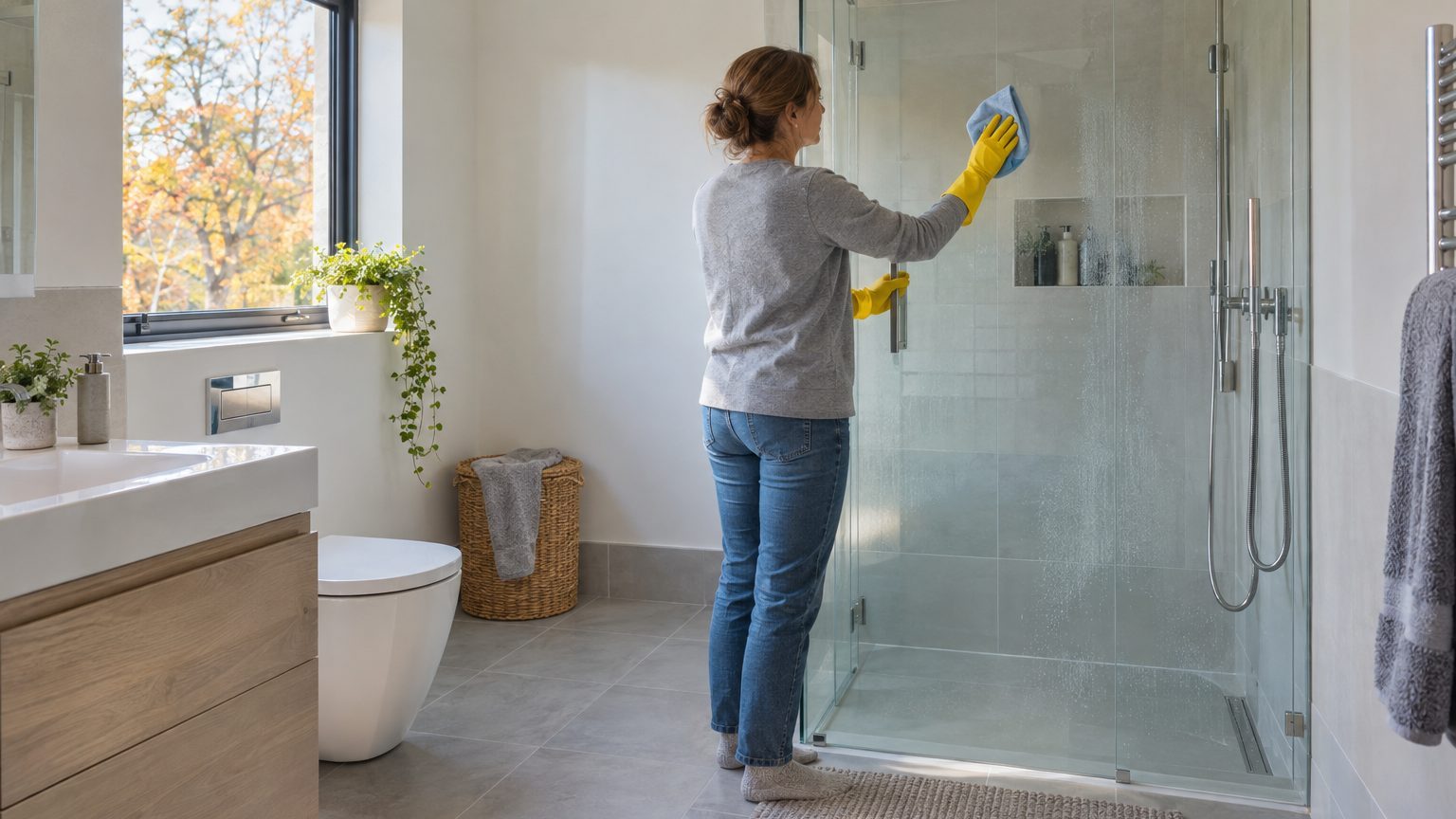
White vinegar, a non-scratch pad, and about 30 minutes of patience will clear most hard water film from a glass shower door. Old, baked-on buildup takes a stronger approach: a paste of baking soda and vinegar, or a dedicated limescale remover, applied in stages. Either way, the stains come off without harsh scrubbing if you let the chemistry do the work.
What you’re actually scrubbing
Hard water stains are mineral deposits, mostly calcium carbonate and magnesium. Water evaporates off the glass and leaves them behind, layer after layer. The U.S. Geological Survey classifies water above 180 milligrams per liter of calcium carbonate as “very hard,” and large parts of the Midwest, Southwest and Texas sit in that range.
That chalky haze is alkaline, which is why acid dissolves it. Vinegar (acetic acid, around 5 percent) and citric acid both work. Soap scum complicates things, since it traps minerals in a greasy layer that acid alone can’t penetrate well.
Old buildup is different. Years of repeated wetting and drying can etch the glass itself, leaving a permanent cloudiness no cleaner will lift.
Test before you commit.
Wet a small corner of the glass and see whether the haze disappears. If it does, the glass is intact and the deposits are removable. If the cloudiness remains once the surface is wet, you’re likely looking at etching, and you’ll need a polish rather than a cleaner.
The basic method for light to moderate stains
Start with warm equal parts white vinegar and water in a spray bottle. Soak the door thoroughly, then wait. Ten minutes is the minimum, and 20 to 30 is better, because dissolving minerals takes contact time more than elbow grease. Spritz again if the surface starts drying out.
Wipe with a microfiber cloth or a non-scratch nylon pad, working in small circles. Rinse with clean water and dry with a squeegee or a clean towel. Skipping the drying step is how the spots come back within a week.
Vertical glass is the hard part, because liquid runs off before it can work. A fix that costs almost nothing: soak paper towels or a strip of cloth in vinegar and press them against the glass, so the acid stays in place. Leave them for 30 minutes, keeping them damp.
Warm the vinegar slightly in the microwave for 30 seconds and it works faster. Never mix it with bleach, though. The combination releases chlorine gas, and a small, closed bathroom is the worst place to produce it.
When the buildup is years old
Stubborn deposits need abrasion and acid together. Make a paste from baking soda and a little water, spread it over the stained area, and spray vinegar over it. The fizzing helps loosen the surface, and the paste gives the pad some grip. Let it sit 15 minutes, then scrub gently.
For the worst patches, a commercial limescale remover containing citric, phosphoric or sulfamic acid is justified. Read the label carefully, because some are not safe on coated glass or on metal frames. Keep the room ventilated, wear gloves, and rinse every trace off the track and hardware, where acid can pit chrome and brushed finishes.
Two more tools are worth knowing about. A melamine sponge (the white, eraser-style kind) works as a very fine abrasive and removes a surprising amount of film on plain glass. For raised, crusty spots, a plastic razor blade scraper held flat and used on a well-soaked surface lifts mineral crust without scratching.
Steel wool is out.
Metal blades and coarse scouring powders can leave fine scratches that collect more minerals than the glass had before. Some shower doors also carry a factory protective coating, and abrasives strip it. Check your manufacturer’s care instructions first, particularly if the water used to bead up on the glass when it was new.
Cerium oxide glass polish is the last resort for etched glass. It’s sold in small kits, used with a felt pad and plenty of water, and it takes patience, often an hour or more for a full door. The results on mild etching can be striking. Deep etching, though, may be permanent.
Keeping the glass clear afterward
Prevention costs about 30 seconds a day. Pulling a squeegee down the door after each shower removes the water before it can evaporate and deposit minerals. Households that do this daily often never see serious buildup at all.
A weekly light spray of diluted vinegar, or a dedicated daily shower spray, handles what the squeegee misses. Keep the bathroom fan running for 20 minutes after showering to cut down the moisture sitting on the glass.
A water-repellent glass treatment can help too. Products designed for shower glass form a thin hydrophobic layer, so water beads and slides off rather than sheeting and drying in place. They wear off, generally in a few months, and need reapplying on a clean, fully descaled surface.
If your home has very hard water, a whole-house softener addresses the cause rather than the symptom. It also protects the showerhead, water heater and faucets, all of which scale up silently. A softener runs a few hundred to over a thousand dollars installed, though, so a cheap test strip from a hardware store is a sensible first step to confirm what your water contains.
One detail trips people up: the bottom track. Mineral residue and soap collect there, and a soft toothbrush dipped in vinegar clears the drain holes, which keeps standing water from re-fogging the glass at the base.