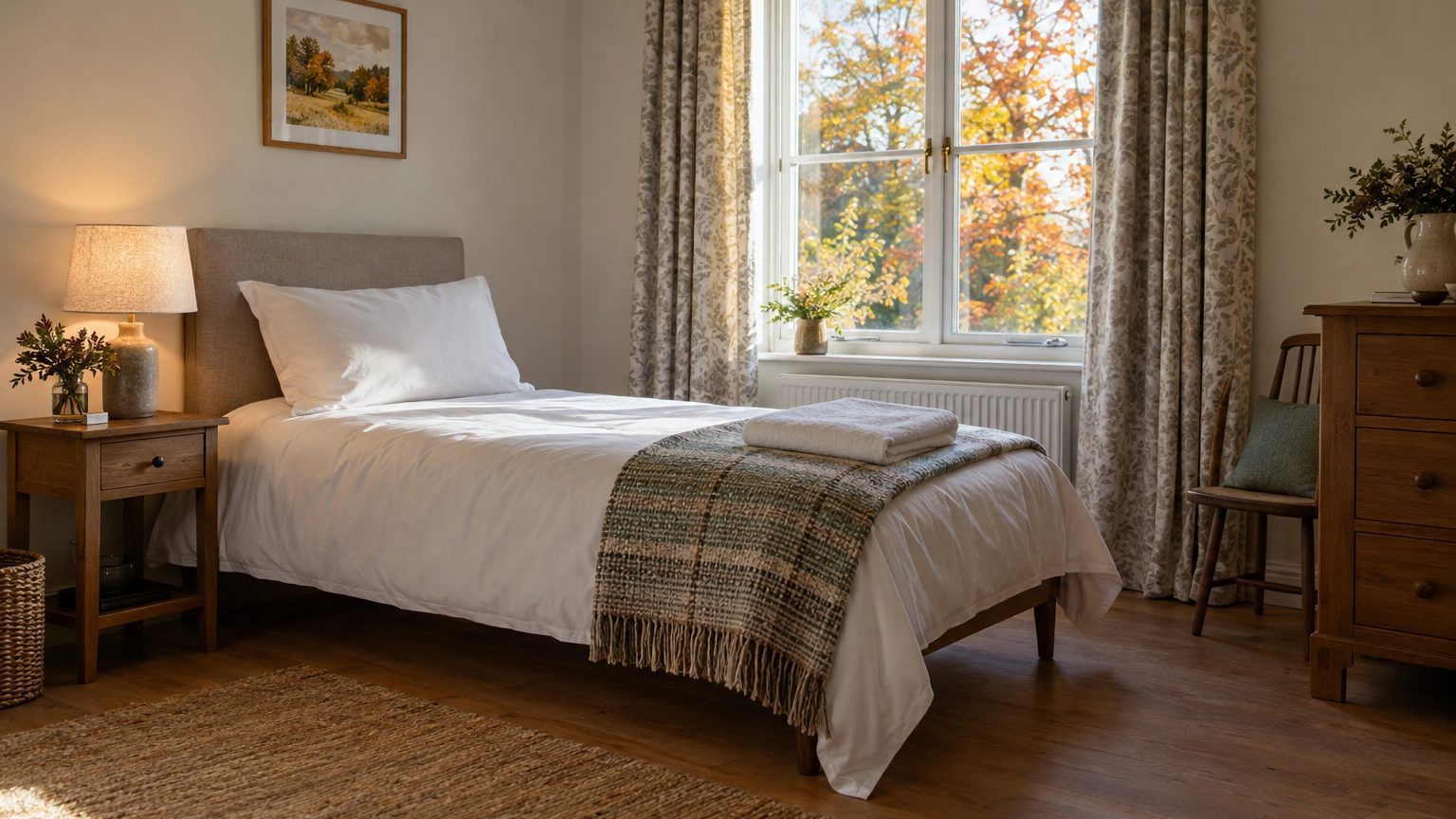
Knowing how to prepare a guest room starts with a test most hosts skip: sleep in it yourself for one night, a few days before anyone arrives. You’ll find the dead bulb, the pillow as flat as a folded towel, the radiator that knocks at 3 a.m. A hotel would call it quality control.
Everything else on the checklist is secondary to that night.
- Sleeping one night in the room reveals faults like dead bulbs, flat pillows and noisy radiators.
- Linens should be washed in water of at least 130 degrees Fahrenheit to kill dust mites.
- The ideal bedroom temperature for sleeping is about 65 degrees Fahrenheit, with humidity kept between 30 and 50%.
Start with the bed and the laundry
Do the wash a couple of days ahead, so nothing is still warm from the dryer or half-folded when the doorbell rings. If you need to do any laundry, do it a couple of days in advance so the linens are ready when you make the guest bed. Do it even if the sheets look clean, because a spare room’s bedding can sit for months and dust mites don’t take vacations. Several allergy-focused sources put the benchmark at hot water, at least 130 degrees Fahrenheit, because that temperature kills dust mites on contact, as long as the care label allows.
Zippered covers on the mattress and pillows are a one-time purchase, and they block allergens from escaping rather than killing mites. Stock more than one pillow as well. A variety lets guests find the one that suits them, and extra pillows make it easier to sit up and read in bed.
Keep a spare blanket within reach, since some people are “hot” sleepers and others like to bundle up. A basket of extra bedding keeps it visible without turning the room into a linen closet. Sheets matter too: a well-made cotton sheet handles hot washes for years, while delicate finishes and cheaper blends often won’t.
Make the bed a day ahead, then close the door.
Temperature, light and the quiet details
The Sleep Foundation notes that many experts agree the ideal bedroom temperature for sleeping is 65 degrees Fahrenheit, though it adds that 65 degrees may not be the best temperature for everyone. A guest room left unheated all autumn can feel like a garage on the first night, so warm it a few hours before arrival and leave a thermostat note. Humidity deserves a glance as well. Keeping bedroom humidity between 30 and 50% discourages dust mite and mold growth, and a basic humidity monitor will tell you where you stand.
Dark and quiet count as much as warmth. Keeping the bedroom cool, quiet, and dark can help minimize disruptions. Shades that actually block the streetlight and a door that closes without a slam will do more for your guests than any scented candle.
Then the small electrical details. Outlets reachable from each side of the bed let guests charge phones without unplugging your lamp, and a nightlight spares them a stubbed toe on the way to the bathroom. Leave the Wi-Fi password on a welcome note, plus an extra house key if your guests will be coming and going on their own.
Room for a stranger’s belongings
Luggage is the most overlooked item on the list.
A suitcase left on the floor takes up precious walking space and can obstruct your guests. A luggage rack, a bench or a cleared chair gives it a home. Empty a few drawers and a stretch of closet, and provide plenty of hangers and drawer space, because anyone staying more than a night will not live out of a bag. Clear the nightstand and dresser top too, and ask of each object whether it serves a purpose in that room.
A tray on the dresser corrals everything together, and guests can put jewelry or other small items in it. Over-the-door hooks let wet towels dry. A small wastebasket and a box of tissues on each nightstand finish the setup.
Towels deserve their own basket. Fold a bath towel, a hand towel and a washcloth for each guest, and make sure they’re in good condition, because frayed ones show. Fresh towels at the end of the bed, in a few different sizes, give a simple hotel-style finish. If a guest bathroom comes with the room, remove the washable items, including towels and rugs, and wash them, then scrub the shower and toilet rather than just wiping them.
Winter adds one more chore: boots, coats and damp umbrellas. Clear a spot in the entryway, or at least a hook and a mat near the bedroom door, so wet gear doesn’t end up on the duvet.
The final 48 hours
Spread the work over three days and it never feels like a chore.
- Three days out: do the one-night test, replace bulbs, check outlets and the thermostat.
- Two days out: wash every linen and towel, then dust and vacuum. Clean the windows, blinds, light fixtures and fans as well.
- One day out: make the bed, set out towels, stock the bathroom, empty the wastebasket.
- One hour out: warm the room, open the window for a few minutes, turn on the lamp, leave the note.
Hotels run on this kind of sequencing, which is why their rooms feel identical on a Tuesday and a Saturday. Their checklists begin with cleaning floors, furniture and windows, then move to stocking fresh linens, toiletries and towels. A home version needs the same order, with fewer minibars.
One last nuance: ask before you decorate. Fresh flowers on the nightstand are a nice touch only if your guests are not allergic, and the same caution applies to the dog, since allergy guidance says dander makes bedding a major exposure zone.
Sources : celebrationsathomeblog.com | allergyava.com