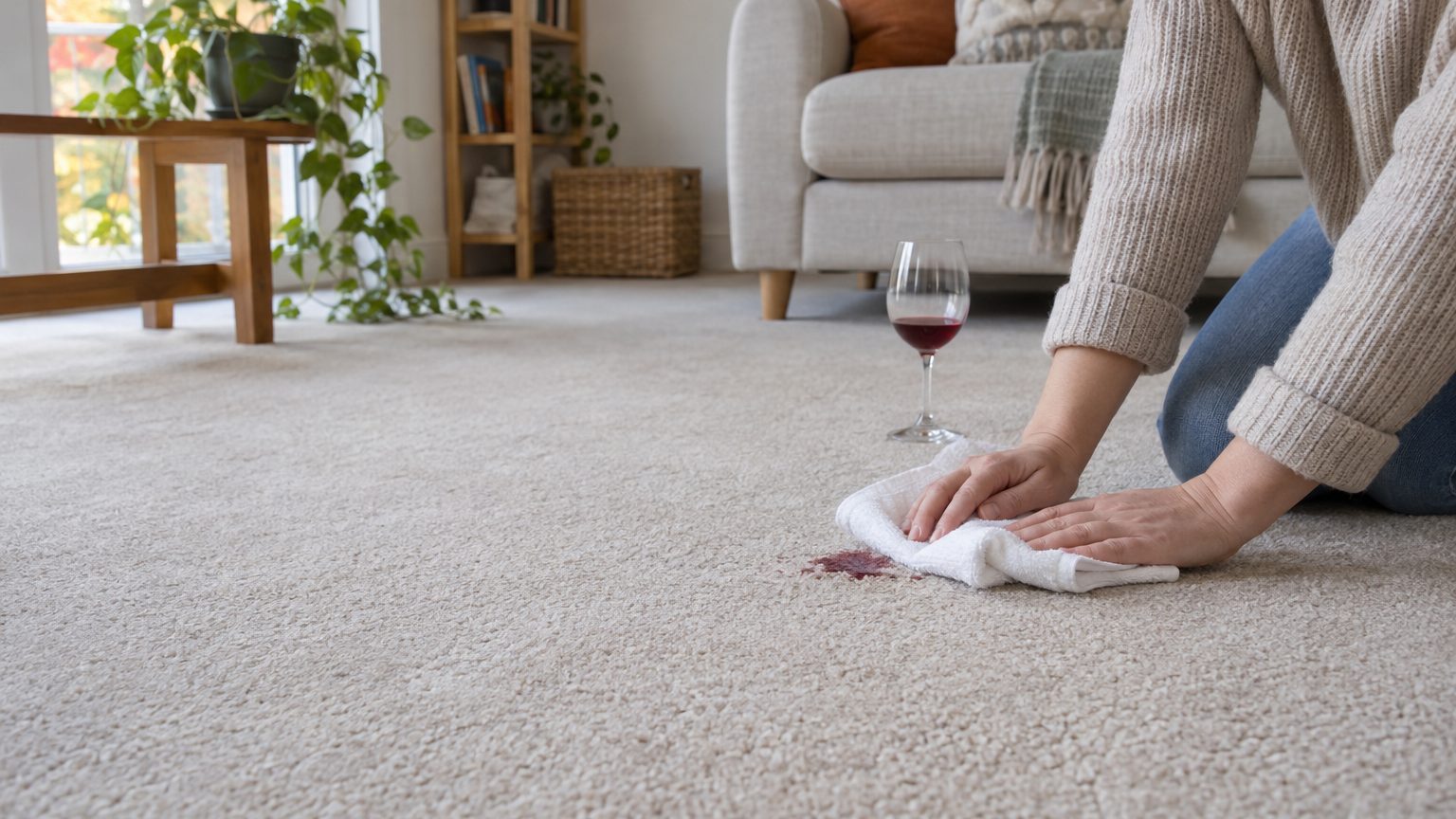
The first sixty seconds decide whether a red wine spill becomes a funny story or a permanent fixture. Grab a white cloth or a wad of paper towels and press down on the wet spot. Work from the outer edge toward the center so the stain doesn’t spread. Don’t rub.
Rubbing pushes the wine deeper into the pile.
- Blot from the outer edge inward, never rub.
- Cold water works better than hot because it keeps tannins from setting.
- A dish soap and white vinegar mix handles most of the remaining stain.
Blot, dilute, repeat: the first five minutes
Press, don’t scrub. A folded white towel is the best tool, because a colored cloth can hand its own dye to wet carpet. The aim is to keep the wine moving upward into the cloth instead of down into the pad, where you can’t reach it. Switch to a clean section of towel every few presses, and keep going until it comes up nearly clean.
Next, add a light splash of cold water, never hot. Tannins are the compounds in grape skins that give red wine its color and bite. They dissolve more easily in cold water, while heat can lock them into the fibers for good.
Club soda is the classic follow-up, and its carbonation is said to help loosen the red pigment. Pour a little on, blot, and repeat until the cloth stops picking up color. Plain cold water does nearly as well, so skip the midnight run to the store if the bottle isn’t already in your fridge.
White wine only adds liquid and sugar.
Salt divides opinion. Some cleaners sprinkle it over the spill to draw out moisture, then vacuum it up once dry. Others point out that it soaks up no more than paper towels do and can leave a gritty residue that attracts dirt. If the towels have run out, it’s a fine stopgap. Otherwise, leave the shaker in the kitchen.
Mixing a cleaner from the kitchen shelf
Once the worst is out, a simple soap solution does most of the remaining work. Stir one tablespoon of dish soap and one tablespoon of white vinegar into two cups of water. Pour a small amount onto the stain and blot often. Stick to plain white vinegar, since other kinds can leave spots of their own, and rinse with a little cold water afterward so the room doesn’t smell like a salad bar once it dries.
Carpet retailers publish a slightly different routine. Mix half a teaspoon of clear dish detergent into a cup of warm (not hot) water and leave it on the stain for three to five minutes. Blot, then dab on undiluted white vinegar with a damp towel and blot again.
Hydrogen peroxide is the heavier hitter. Mix two parts of 3% peroxide with one part dish soap, and use it only on light-colored synthetic carpet, where a little lightening of the dye won’t show. On wool, stay with the gentler soap-and-vinegar mix.
Test every cleaner on a hidden corner first, peroxide above all.
Finish by laying a half-inch pad of white paper towels over the damp spot and weighing it down with a heavy book or a plate. Leave it overnight if needed. The pad wicks out moisture and any wine still lingering in the fibers. Dampness left in the pile is how a stain you thought was gone creeps back to the surface.
If the stain has already set
Dried wine is tougher, but not hopeless. The pigments and tannins have settled into the fibers, so you have to wake them up first. Vacuum to remove loose grit, rehydrate the spot with cold water or the soap-and-vinegar mix, and let it sit for about ten minutes. Then blot, and repeat until no more color comes up.
For truly stubborn marks, oxygen bleach is the most effective option on set-in wine. That means a percarbonate powder, not chlorine bleach, which can strip carpet dye. It needs a thorough water rinse afterward.
Fiber type changes the picture. Polyester resists water-based stains well, so wine often sits on the surface a little longer before sinking in, which buys you extra minutes. Nylon and wool are less forgiving: wool in particular accepts acidic wine pigment readily, so the stain bonds fast. A dinner-party spill on a wool rug calls for speed first and gentle chemistry second.
If the mark still shows after two or three rounds, stop. Repeated soaking and blotting can fray the pile and leave a halo around the stain. Rent or buy a carpet cleaner built for deep cleaning, or call a professional who has the extraction equipment to flush out what’s below the surface.
Keep a small kit where the spill is most likely to happen, near the sofa or the dining room. A roll of white paper towels, a bottle of club soda and a small container of dish soap cost almost nothing. They can cut the response time from minutes to seconds, and that gap is what separates a ten-minute cleanup from a rug you’ll be rearranging furniture to hide.
Sources : mollymaid.com | ecoactions.homedepot.com