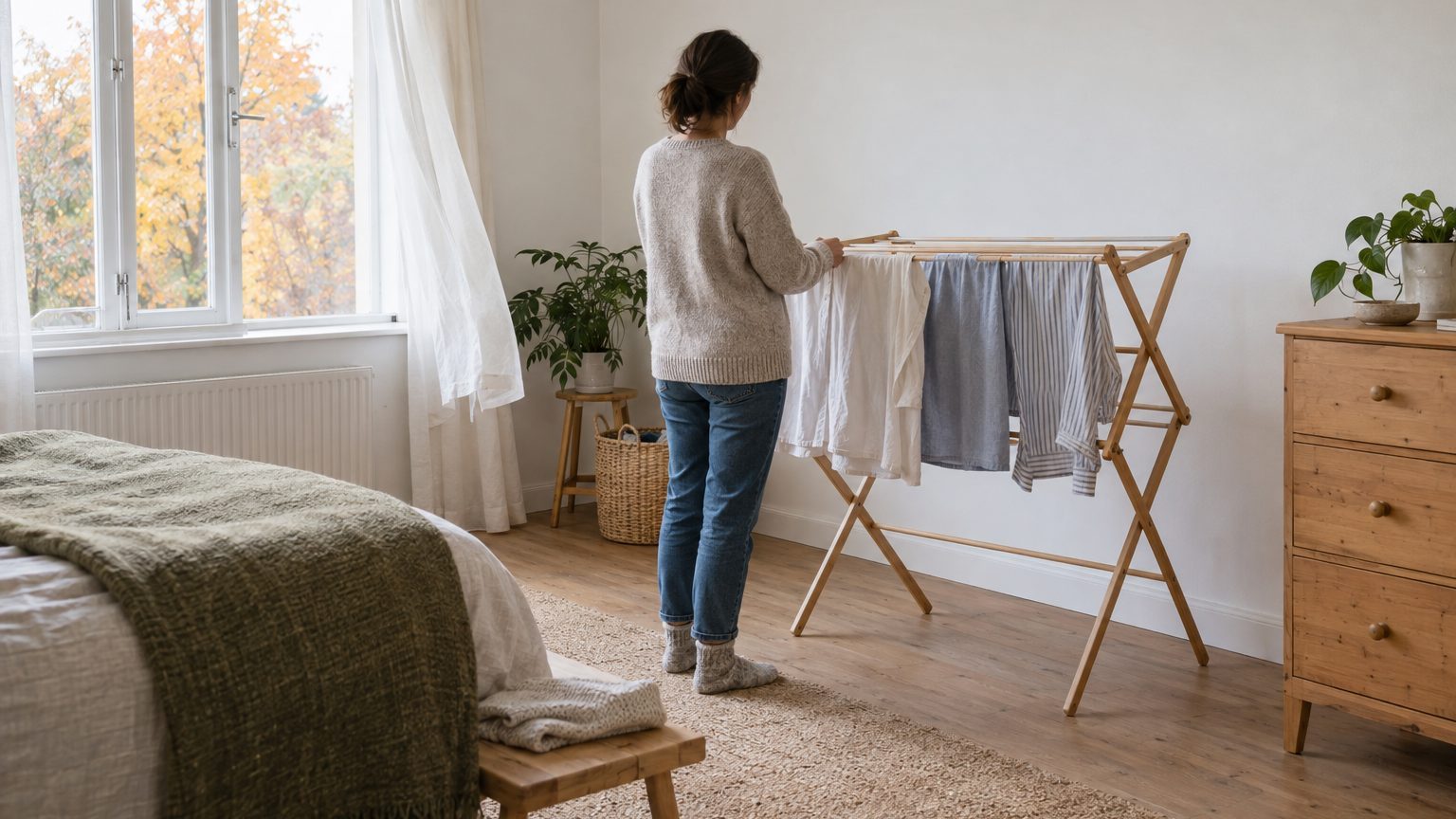
A single load of laundry can release about two liters of water into your home as it dries. That is roughly four standard water bottles evaporating into one room. Even starting at a healthy 50% relative humidity, adding that much vapor to a small space can push it well over 80%, and it stays there as long as the clothes are damp and the air doesn’t move.
Mold needs only a day or two to move in.
Growth can begin within 24 to 48 hours when humidity stays above 70% and surfaces stay damp. That damp corner behind the rack, the fogged window above it, the faint sour smell in your favorite sweatshirt: all of it traces back to the same cause. Knowing how to dry clothes indoors comes down to controlling where that water goes. The method matters less than the moisture.
- One load of laundry releases about two liters of water into a home as it dries.
- Mold can begin growing within 24 to 48 hours when humidity stays above 70%.
- A spin at 1,400 to 1,600 RPM leaves clothes around 25% moisture, versus about 30 to 35% at 1,200 RPM.
- Opening a window for 10 to 15 minutes creates a cross-breeze that moves moist air out.
Win the battle before the rack comes out
The cheapest moisture control happens inside the washing machine. A 1,200 RPM spin leaves clothes with about 30 to 35% residual moisture, while a 1,400 to 1,600 RPM spin can get that down to around 25%. Every point you wring out in the machine is water that never reaches Your Living Room air, so use the fastest spin setting each fabric tolerates. Jeans, towels and cotton tees can take it. Delicates can’t.
A few old tricks still earn their place. For heavy cotton that stays soggy after a spin, rolling it in a dry bath towel and pressing firmly pulls out a surprising amount of water. Once the clothes are on the rack, hanging a dry towel among the wet pieces works too, since the towel soaks up excess moisture from the air and speeds up drying. Swap it out once it feels damp, because a wet towel stops helping.
Pick the right room, then give clothes space
The laundry room is rarely the best place to hang laundry. Clothes left in a dark, unventilated, wet spot such as a basement become a breeding ground for mold spores and bacteria. A brighter room with some air movement, even a spare bedroom, usually does a better job.
Air movement is the whole game. Cross-ventilation, even through a gap under the door, can cut drying time by 30 to 50% compared with a sealed room, because drier air keeps flowing across the fabric while humid air leaves. In winter, you don’t need to freeze the house out: opening a window for 10 to 15 minutes creates a cross-breeze that pushes moist air out and pulls fresh air in. A bathroom with a working exhaust fan is another smart option, as long as you run the fan and close the door to the rest of the house.
Spacing matters as much as location.
Crowding a rack is the most common mistake, and it’s an easy one to make when a week of laundry piles up. Overcrowding hinders air circulation and lengthens drying times. Leave a hand’s width between garments, hang large items on the outer bars with small ones inside, and split the load across two racks if needed. Skip the radiator too. Draping wet clothes over it blocks the heat from reaching the room and tends to leave you with damp walls and a cold living space.
Let a dehumidifier do the heavy lifting
If you dry laundry indoors every week from November to March, a dehumidifier pays for itself in avoided mold and faster drying. A setup from a mold inspector at Howard Environmental shows how it works. Put the rack in the center of a spare room so air can circulate, with the dehumidifier 3 to 6 feet away and its intake facing the clothes. A fan on the opposite side blows air across the laundry toward the unit. Keep the door closed so you aren’t humidifying the whole house.
Skip the bucket if your layout allows it. A gravity drain hose with a continuous downward slope, or a small condensate pump if gravity isn’t an option, handles the water automatically.
A cheap hygrometer takes the guesswork out. The EPA recommends keeping indoor humidity between 30 and 60 percent, and a reading that climbs past 60 while clothes are drying tells you to add airflow or run the dehumidifier harder. Here is the counterintuitive part: in a heated house in January, the air can be dry enough that a modest load in a large, open room does no harm and even adds a little comfort. The trouble starts in small, closed rooms, where the moisture has nowhere to go.
Keep the musty smell from setting in
The sour, damp-towel smell comes from bacteria and mold that multiply while fabric stays wet too long. Slow drying is the cause, so speed is the cure. Pull laundry out of the washer the moment the cycle ends, since a load that sits wet for hours starts smelling before it ever reaches the rack. Wash towels and gym clothes warm when the care label allows, and wipe the rubber door seal on a front-loader, where moldy residue often hides.
For clothes that already carry a faint mustiness, rewashing with a cup of white vinegar in the rinse compartment often resets them, and detergent alone usually can’t. Don’t mask the odor with extra fragrance. Perfume layered over mildew just smells like perfume layered over mildew.
Check seams, not sleeves.
Thick areas such as waistbands, hoodie pockets and jeans hems dry last, and they are where odor starts if you fold too early. A garment that feels cool against your wrist still holds moisture, because evaporation keeps drawing heat out of the fabric. Fold it only when the thickest part feels as warm as the rest of the room, and if you’re unsure, give it another hour on the rack.
One last detail for anyone with a vented dryer: it remains the best tool for towels and bedding, which take the longest to dry on a rack. Run a short cycle for those and rack-dry the lighter pieces, and your indoor moisture load drops by more than half.
Sources : gcha.org.uk | irishexaminer.com