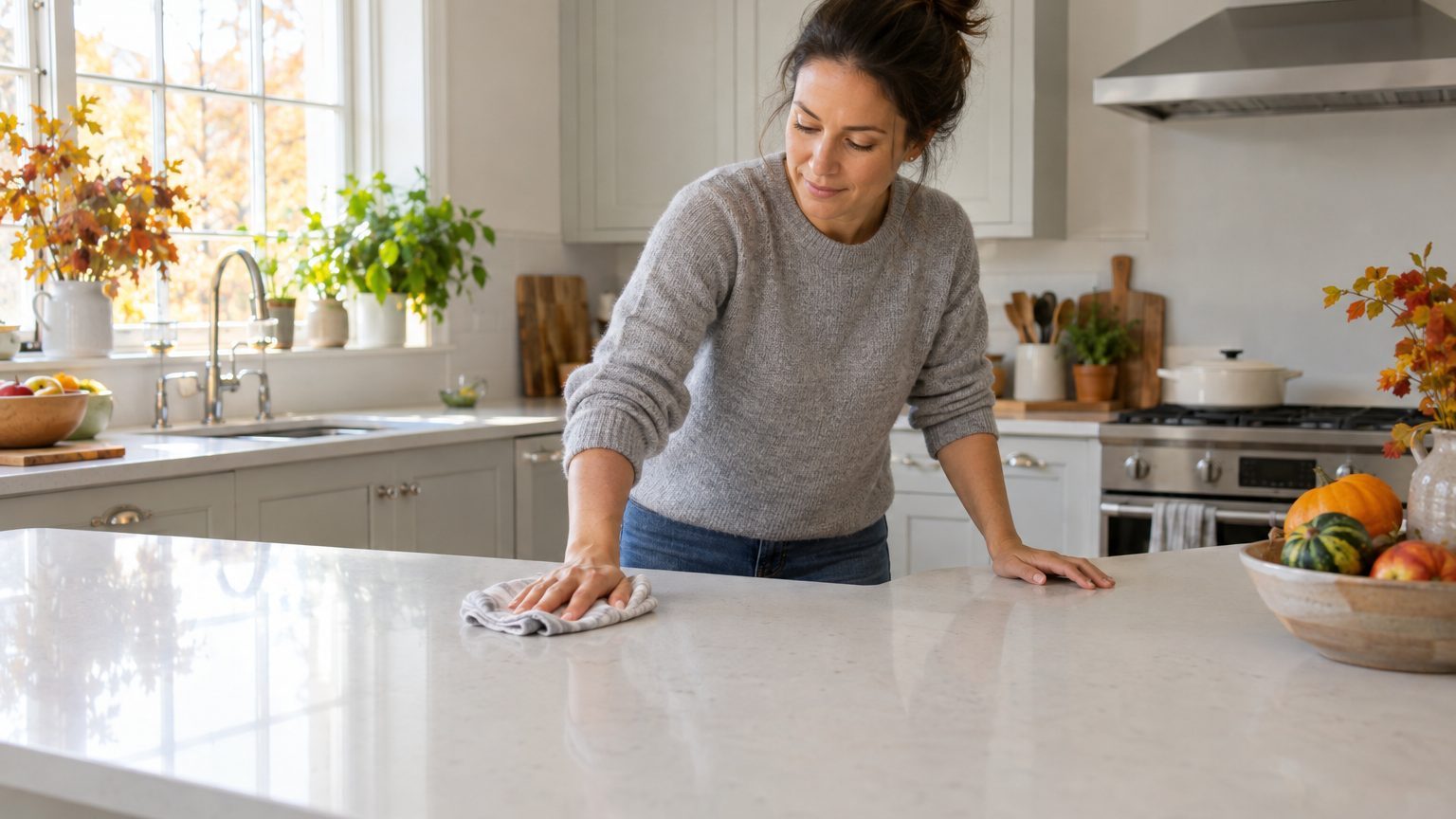
The rule behind how to deep clean a kitchen fits in four words: top to bottom. Crumbs, grease flecks and dust all fall, so anything you scrub at counter height gets dirty again if you clean the cabinet tops afterward. Follow that gravity logic and a kitchen that looked hopeless on Thursday can be guest-ready by Saturday afternoon.
Floors come last. Always.
- Cleaning top to bottom prevents grime from falling onto already-cleaned surfaces.
- Clean surfaces with warm soapy water first, then sanitize them with a bleach solution.
- Mix a fresh bleach solution of 1 tablespoon per gallon of water for each cleaning session.
Empty first, then let the slow jobs work while you do the rest
Clear the counters completely. Small appliances, the fruit bowl, the dish rack and the pile of mail that migrated in from the entryway all go to another room. Then empty the Refrigerator onto a table, tossing anything expired as you go, and keep perishables in a cooler with ice packs while the shelves are bare.
Next, start the jobs that need time. Spray the oven interior with oven cleaner, or spread a baking soda and water paste, following the manufacturer’s instructions, and close the door. Put a dishwasher cleaner or a cup of vinegar on the top rack and run an empty hot cycle, which appliance technicians suggest doing monthly. Both machines then work for you while you move on.
Look up. Cabinet tops, the range hood and light fixtures collect a sticky film of dust and cooking oil that you never see from the floor. Range hood filters and the vent need attention roughly every two to three months, which means a kitchen that gets daily use is probably overdue.
Dust dry first, then degrease. Never the reverse.
Wet dust turns into paste, and paste is harder to remove than either dust or grease alone. A dry cloth or vacuum brush attachment on the cabinet tops, then a warm soapy cloth, then a clean rinse cloth. Cabinet fronts come next, with extra attention around the handles and the strip beside the stove where cooking splatter lands.
The appliances that hold the real grime
Inside the refrigerator, wash shelves and drawers with warm, soapy water, and wipe the door gaskets with mild soap so they keep sealing. Appliance pros recommend a refrigerator deep clean every two to three months, so a pre-party scrub is not overkill. Do the shelves while the cooler is doing its job, and put the food back only when everything is dry.
Then pull the fridge out. Unplug it first (and turn off the gas supply if you are moving a gas range), then use the vacuum’s crevice tool on the coils and the dust bunnies underneath. Dust on the coils makes the compressor work harder, which raises the electric bill and shortens the machine’s life. A common recommendation is every six months, and every three in homes with pets.
By now the oven has had its soak. Wipe out the loosened grime, scrub the racks in the sink, and clean the door glass last. If you rely on the self-clean cycle, use it sparingly: technicians warn that the extreme heat strains electronic components, and they cap it at a few times a year. Many appliance retailers suggest deep cleaning the oven every three to six months, and before heavy-use stretches like the holidays.
Pull the dishwasher filter and rinse it under the tap. It is a weekly job that almost nobody does.
The microwave is the quick win. A bowl of water heated for a few minutes loosens splatter so it wipes off. A damp sponge microwaved for one minute is also a recognized way to sanitize it, as university extension programs point out, though never put a sponge with a metal scrubbing layer in there.
Counters, sink and handles: clean first, then sanitize
This is where most people stop one step short. Federal food safety guidance is clear that cleaning and sanitizing are separate jobs. Wash with warm, soapy water first, because food residue weakens sanitizers, then sanitize. USDA research found that only 32% of people clean and sanitize the surface where they prepare raw meat, roughly one in three.
For counters, cutting boards and the sink, the standard home solution is 1 tablespoon of unscented liquid chlorine bleach per gallon of water. Apply it, let it stand for several minutes, then rinse and air dry or pat dry with paper towels. Mix a fresh batch for the job, since a bleach solution loses strength and should be discarded after a week. Never combine bleach with vinegar or ammonia, and if you prefer a store-bought sanitizer, check that the label says it is safe on food contact surfaces.
The sink gets its own pass. Extension guidance suggests cleaning and sanitizing it once or twice a week. Drains and disposals need a monthly flush of 1 tablespoon of bleach in 1 quart of water, which is the smell you were attributing to the trash can.
Then the touchpoints. The CDC advises cleaning high-touch surfaces regularly and after visitors, and in a kitchen that means the fridge handle, cabinet pulls, faucet handles, light switches and the oven knobs. Guests will touch every one of them within the first ten minutes.
Toss the old sponge. Sponges and damp dishcloths give bacteria a moist place to grow, so replace the sponge before the party, and run dish towels through the hot cycle of the washing machine.
Floors last, then reset the room
Sweep or vacuum the floor, including the baseboards and the gap beside the stove, then mop. Moving down the room all morning means you have already collected every crumb the upper surfaces dropped, so the floor only has to be done once. Pull the trash bag, wipe out the bin, and put in a fresh liner.
Restock the refrigerator with the items you actually want guests to see, and wipe the door shelves as you go. Put back only a few counter items, since a clear counter looks cleaner than any amount of scrubbing. For a party, give the sink a final rinse and polish the faucet, because that is the first thing a person leans on to fill a glass.
One last detail about timing: wait until the day of your gathering to mix the bleach solution for the final counter wipe, because after a week it is no longer reliable.
Sources : extension.umaine.edu | housedigest.com