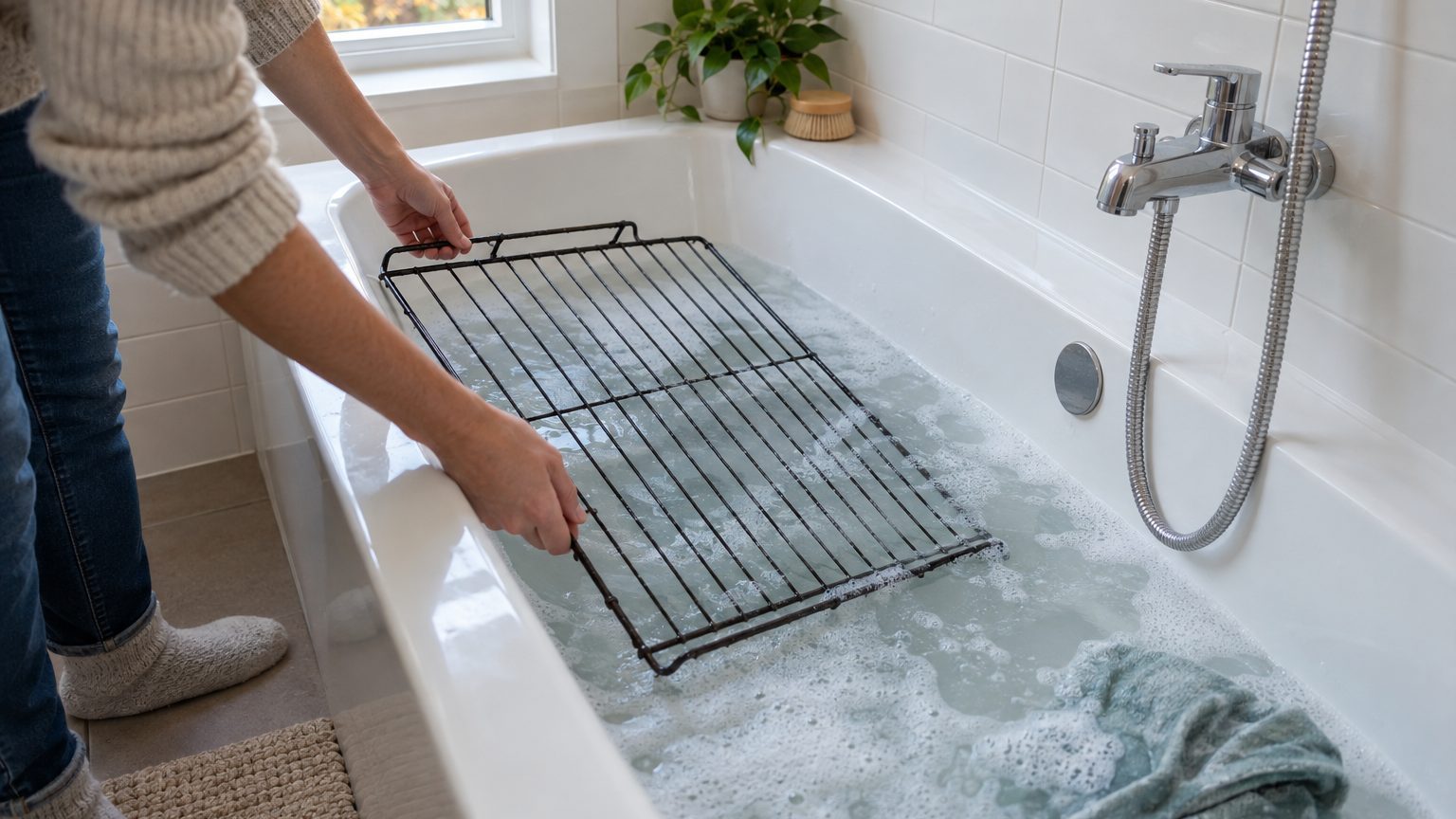
The easiest way to clean oven racks is to lay a towel in the bathtub, set the racks on it, cover them with the hottest tap water you have, add about half a cup of dish soap, and leave them overnight. By morning, the burnt-on film that resisted three rounds of scrubbing has mostly let go. Your only job is to wipe.
Soaking beats scrubbing.
- Hot water with about half a cup of dish soap loosens burnt-on grease overnight.
- A minimum soak of four hours works, but overnight gives the best results.
- Baking soda paste left for about 20 minutes lifts remaining black carbon spots.
The overnight tub soak, step by step
Start with the towel, because bare racks will scratch enamel or porcelain. Placing towels or sponges under the corners of the racks protects the tub from scratching. Next, run water hot enough to cover everything, then add the soap. Quantities vary by household: one approach calls for a quarter cup of dish soap, while others go up to half a cup of dishwashing soap, or up to three-quarters of a cup of laundry detergent. Dish soap is built to cut kitchen grease, so it makes sense that it does the heavy lifting here.
Duration matters more than brand. A minimum of four hours is the floor, and overnight is ideal. After eight hours, even heavily carbonized grease softens considerably. You will know it is working when the bathwater turns the color of weak coffee.
In the morning, drain the tub and go over each rack with a non-scratch pad. Keep the rack wet while you scrub, since dry scrubbing just smears grease around. Rinse under the shower head until no suds remain, then dry the racks with a soft cloth before they go back in the oven. Damp steel in a warm oven is how rust spots start, and in a humid kitchen that happens faster than you would expect.
Warn the household first. Nobody wants a surprise at 6 a.m.
Variations for heavier grease and no bathtub
A tub is not a given, especially in apartments with a shower stall. A large sink works for one rack at a time, and a rimmed baking sheet or a heavy-duty trash bag can stand in for the tub. Another approach wraps the racks in aluminum foil and sets them on a towel in the tub, adding a couple of dishwasher tablets before covering them with hot water. The foil keeps the solution pressed against the metal.
Baking soda is the usual booster for greasier racks. Sprinkle it over the racks, spray with white vinegar, and once the foaming stops, cover the racks in hot water and let them sit overnight. The fizz looks dramatic, but the real work still happens during the long soak. Think of the vinegar as a starter, not the main event.
Dryer sheets have a following, too. The fabric softener in them is said to break down grease and release baked-on food. I would treat that as a low-effort experiment rather than a guaranteed fix. Results seem to depend on how old the buildup is, and a rack that has gone a year without cleaning will need more than a softened film.
What to do about stubborn black spots
Even a good soak often leaves two or three nubs of black carbon. These usually sit where something boiled over and then got baked on again and again.
That is a job for paste.
Mix baking soda with just enough water to spread, then pack it onto the spots. One common ratio is three parts baking soda to one part warm water, left on for about 20 minutes. For truly crusty carbon, some cleaners leave the paste for one to two hours before scrubbing with a firm brush. If the paste dries hard, a plastic spatula or scraper will lift it without scarring the metal.
Grease that will not budge sometimes responds to a different tactic. Apply undiluted dish soap directly onto the dry grease, give it a few minutes, then scrub with a little water. Another option is a stronger paste: stir concentrated dish soap and a half cup of kosher salt into the baking soda paste, spread it on, and leave it overnight. The salt adds mild grit without the damage steel wool would do.
Shortcuts that backfire
The self-clean cycle looks like the obvious shortcut. Leave the racks inside and you risk ruining them. The extreme heat can warp racks permanently, and it can damage chrome plating. Most manufacturers tell you to pull the racks out first, so check your manual.
Abrasives are the second trap. Magic Eraser should not be used on stainless steel or on metal with a non-stick coating, or in combination with any chemicals. If your racks are coated or have a special finish, stick to soap, soft pads, and patience. Steel wool is a bad idea for the same reason.
The dishwasher is a gamble, not a solution.
It can work: a normal cycle suits racks that fit and have no special coating. But heavy grease can end up redeposited on your dishes, and racks rarely fit flat. If you try it, run the cycle empty of anything else, then wipe the dishwasher’s filter afterward, since the grease has to go somewhere.
Keeping the grime from coming back
Frequency depends on how often you roast. Every three to six months is a sensible rhythm, and wiping drips as soon as the oven cools keeps the soak short. A quick pass with a damp, soapy cloth after a greasy Sunday dinner takes about two minutes. Letting that same drip bake through five more cycles turns it into carbon.
Lining the oven floor with a sheet pan on the lower rack catches most drips before they reach the racks. Cooking fatty roasts in a deep pan with sides also keeps splatter down. Neither habit removes the need for a deep clean, but both stretch the time between them.
One last tip for the cold months: try the soak on a weekend before a big holiday cook, when you can do it overnight and let the racks air-dry fully by midday.
Sources : nappliancerepair.ca | jascleaning.com