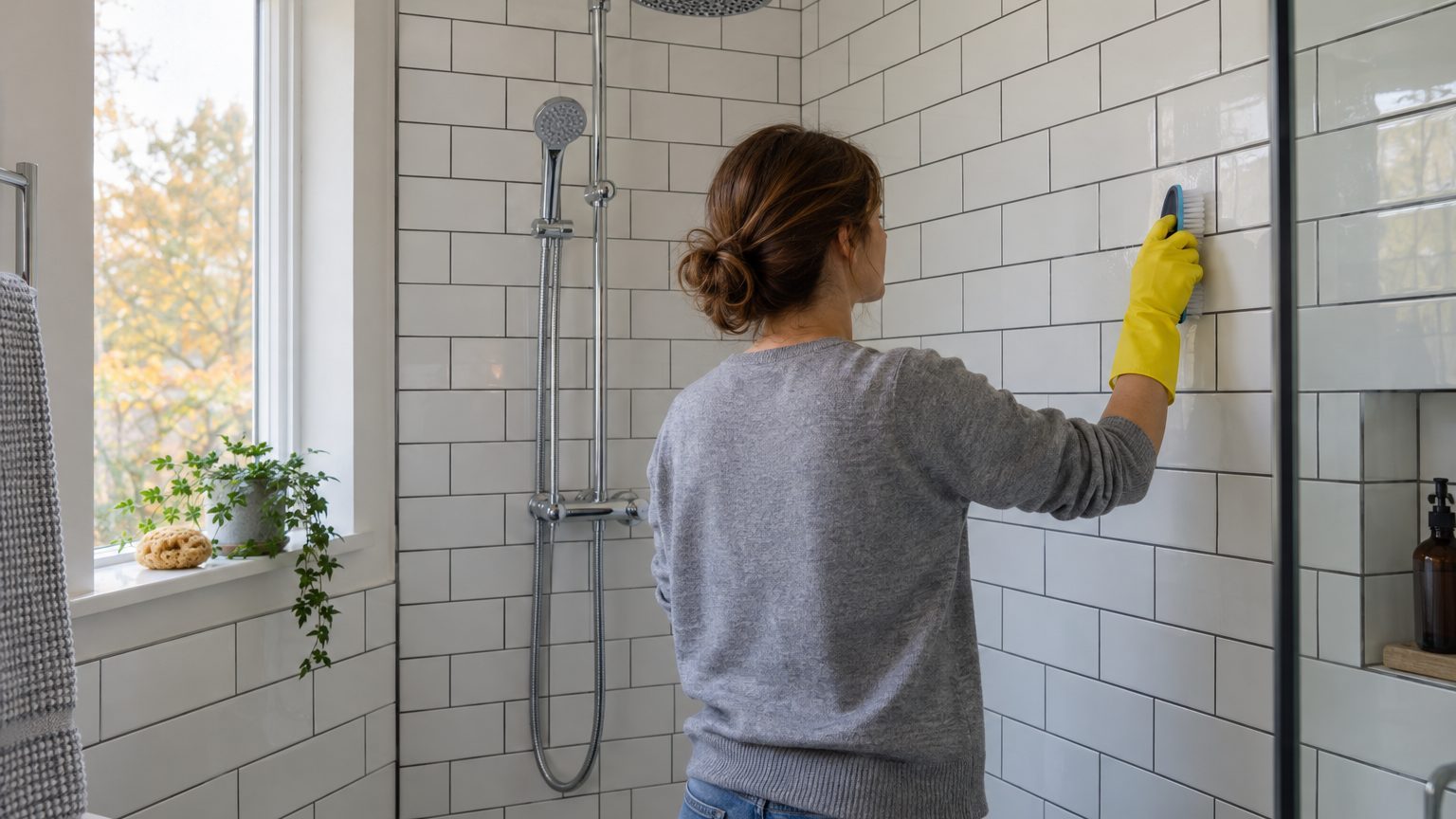
Black lines between shower tiles are almost always mildew, and the fix is a ladder of three products rather than one miracle spray. Start with diluted white vinegar, move to a baking soda paste, and bring in hydrogen peroxide if the stain holds. Most grout gives in before the last rung.
Bleach, in fact, comes with more baggage than payoff.
- Diluted white vinegar lifts mild mildew from grout when scrubbed with a stiff brush.
- A baking soda paste paired with vinegar foams and loosens stains that vinegar alone misses.
- 3% hydrogen peroxide soaked for about 15 minutes handles stubborn black grout without damaging it.
- Chlorine bleach fades the stain but cannot penetrate porous grout, so the mildew returns.
Start gentle: vinegar, then baking soda
The Home Depot’s shower guide opens with one part vinegar to two parts water, scrubbed in with a stiff brush, rinsed with clean water and dried. Work in small sections, because dirty water can settle back into the grout if you rinse the whole wall at the end. Some cleaners go stronger, spraying undiluted vinegar and letting it sit for an hour. Another source cautions that vinegar isn’t the strongest agent, so it suits mild cases, which is fair: if a couple of passes don’t lift the gray, stop spending effort on it.
When vinegar stalls, press a paste of baking soda and water into the lines, then spray it with equal parts vinegar and warm water. The mixture foams, and once it stops you scrub with a stiff brush and rinse.
Brush choice matters more than most people think. Nylon brushes are generally safe for grout and tile, but brass brushes sold for steam cleaners may damage them. For narrow lines, an old toothbrush does the job just as well.
Scrub the caulk line gently, because lifted caulk invites mildew behind it.
Home Depot notes that hard scrubbing can lift caulk off the wall, and once it lifts, dirt and mildew build up behind it. Steam is the chemical-free alternative: a steam cleaner with a grout nozzle is considered an environmentally friendly option. Check that your model is rated for walls, since some work only on floor tile.
When the black holds on: peroxide, oxygen bleach and the chlorine question
Drugstore 3% hydrogen peroxide is the logical next step. Spray it on undiluted, or stir it with baking soda into a paste. Let it soak for about 15 minutes, then scrub with a stiff brush, and rinse with warm water afterward. One cleaning company argues that peroxide, unlike bleach, can work on porous materials, exactly where mold wants to grow, and that it won’t degrade or discolor unsealed or colored grout. I’d still test a hidden corner first.
Tight corners need a different tactic. Soak a cotton ball in peroxide, set it on the grout, wait a few hours, then rinse with warm water. From the laundry room, oxygen bleach also works on mild staining: mix it with hot water per the package directions and let it dwell about 15 minutes before scrubbing and rinsing.
Chlorine bleach is the product most people reach for, and the one with the weakest case. The EPA says bleach may sometimes be necessary but doesn’t recommend it for routine mold cleaning. It can kill mold on hard, nonporous tile, but it can’t penetrate porous materials where mold roots grow deep, and grout is porous. Home Depot goes further and warns that chlorine bleach products can damage or ruin grout. The stain may fade to white while the colony underneath carries on.
Never mix bleach with ammonia, vinegar or other cleaners.
New Jersey’s health department spells out the stakes. Bleach plus ammonia creates chloramine gas, which can cause coughing, shortness of breath and chest pain. Bleach plus an acid produces chlorine gas, and vinegar is an acid. That matters in a shower, where you may have just finished a vinegar round. If you do decide to use bleach, rinse the area with plain water and let it dry first.
Keeping the black from coming back
Cleaning only resets the clock. Mold returns to the same spot if the underlying moisture issue isn’t resolved, and recurring mildew on freshly cleaned tile usually points to a bathroom that isn’t ventilating fast enough after showers. Run the exhaust fan during the shower and for a while afterward. A dehumidifier can help in bathrooms without a fan, since both reduce moisture buildup.
A routine beats a rescue. One cleaning company recommends light scrubbing every few weeks and resealing the grout yearly. Wiping the wall with a squeegee or towel takes thirty seconds and removes the film of water that mildew depends on. Sealer only helps on clean, fully dry grout, so never apply it over a stain you hope to hide.
Covering mildew is a trap. The EPA’s cleanup guidance states plainly that painting or caulking over mold will not prevent it from growing.
If black returns across most of the grout lines within weeks, suspect water getting behind the tile through failed caulk or a leaking fixture. That is a repair job, not a scrubbing job. The EPA also acknowledges that, in most cases, complete sterilization of the area is impossible. Realistic success means grout that stays clean because the shower dries fast.
Sources : outofthemold.com | maids.com