Grout stains because it is porous. That single fact explains why a shower that was scrubbed last month already looks gray again, and why most cleaning failures come down to the wrong product or the wrong order of steps.
Cementitious grout, the kind in most American bathrooms, is essentially sand and cement with tiny capillaries running through it. Water, soap scum, body oils and mold spores all travel into those channels. Surface wiping removes what sits on top, not what has moved in.
Start with what is actually on the grout
Dingy grout is usually one of three things: soap scum, mineral deposits from hard water, or mold and mildew. Each responds to a different cleaner, and mixing up the diagnosis wastes an afternoon. Gray-white film that feels slightly waxy is soap scum. Chalky crust near the showerhead or on the lower rows is mineral buildup. Black or pink spots that return within weeks are biological growth.
Test before you commit. A few drops of white vinegar on a hidden stretch will fizz or soften mineral deposits within a minute or two. If nothing happens, you are probably dealing with soap residue or mildew.
One warning applies to everything below. Never use vinegar or other acids on grout next to natural stone such as marble, travertine or limestone, because they etch the stone itself.
The cleaning routine that works
Begin by running hot water for a minute to warm the tile, then ventilate the room. A fan or an open window matters more than most people think, especially once you start using stronger products.
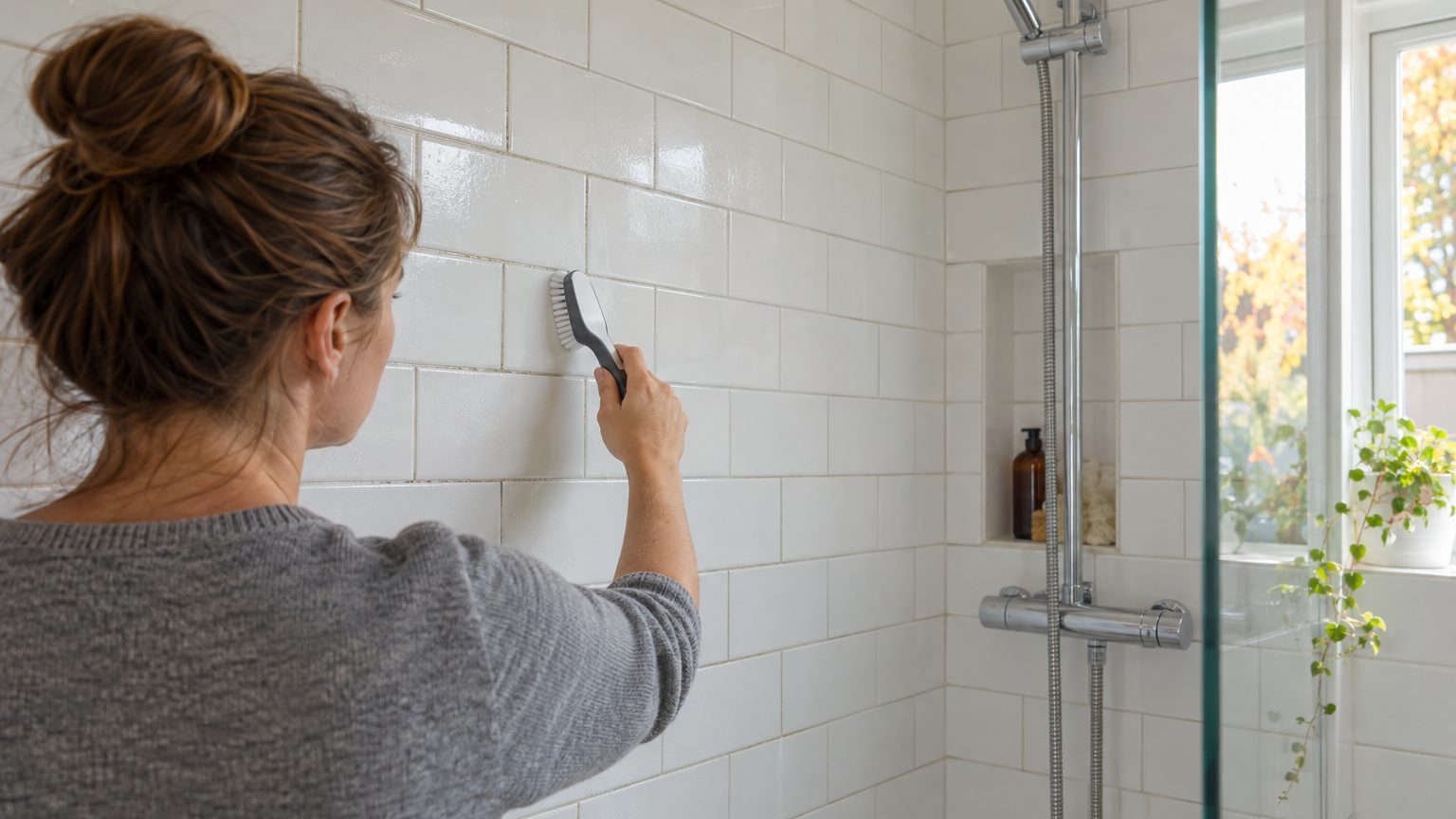
For routine grime, make a paste of baking soda and water, thick enough to cling to a vertical line. Press it into the grout, wait 10 to 15 minutes, then scrub with a stiff nylon brush (an old toothbrush works for small areas, while a grout brush with an angled head covers a full wall far faster). Rinse thoroughly. Skip wire bristles, which gouge the surface and create more places for dirt to settle.
Stubborn soap scum and mineral film call for a spray of equal parts white vinegar and warm water. Let it sit for five minutes, scrub, and rinse. Many cleaning professionals also reach for an alkaline degreaser on soap scum, since it breaks down oils that vinegar leaves behind.
Mold is a different fight.
For black spots, a hydrogen peroxide solution at 3 percent, applied and left for 10 minutes, lightens growth without the fumes of bleach. Oxygen-based powdered cleaners do the same job on larger areas and tend to reach deeper into the pores than a plain spray. Chlorine bleach whitens the surface quickly, but it does not always kill what is rooted below, and it should never be combined with vinegar or ammonia. The mixture releases toxic gases, according to the Centers for Disease Control and Prevention.
Work in sections of roughly three feet, rinsing each before moving on. Finish by squeegeeing or wiping the walls dry. Skipping that last step lets the water you just used feed whatever remains.
Sealing: the step that stops the cycle
Once grout is clean and fully dry, it is as receptive as it will ever be. That is the moment to seal. Wait at least 24 to 48 hours after cleaning, longer if the shower has been damp for weeks, because sealing over trapped moisture locks the problem in.
Penetrating sealers, usually labeled as impregnating, soak into the pores and repel water from within. They are the better choice in showers because they do not leave a film that peels. Apply with a small brush or applicator bottle, wipe excess off the tile face within the time listed on the label, and keep the shower dry for the cure period, commonly 24 to 72 hours.
Test whether you need to reseal with a simple trick. Drip a little water on the grout. If it darkens and soaks in within a minute, the sealer has worn off. Most showers need resealing every one to two years, though heavy use or hard water can shorten that.
Epoxy grout skips this whole step. It is nonporous, resists staining and rarely needs sealing, which is why installers often recommend it for showers despite the higher material cost and tougher installation.
Daily habits that keep it clean
Dryness is the whole strategy. Mold needs moisture and a food source, and in a shower the food is soap residue. Remove the moisture and the residue loses its power.
A squeegee pass over the walls takes about 30 seconds after each shower. Run the exhaust fan for 20 to 30 minutes afterward, and make sure it actually moves air by holding a square of toilet paper up to the vent. If it does not stick, the fan is underperforming or the duct is blocked.
Switching from bar soap to liquid body wash cuts the waxy film that clings to lower rows of tile. A weekly spritz of a diluted vinegar or commercial daily shower spray handles what the squeegee misses, and it prevents the buildup that makes deep scrubbing necessary.
Cracked or crumbling grout is another matter. No amount of cleaning fixes it, because water gets behind the tile and the damage moves to the wall. If you can pick out pieces with a fingernail, regrouting is the right call, and caulk (not grout) belongs wherever walls meet the tub or floor, since those joints move.
One last nuance on color. If you want grout that hides life, choose a mid-tone gray over bright white. Stain-resistant epoxy in a darker shade can look clean years longer than the white you started with.