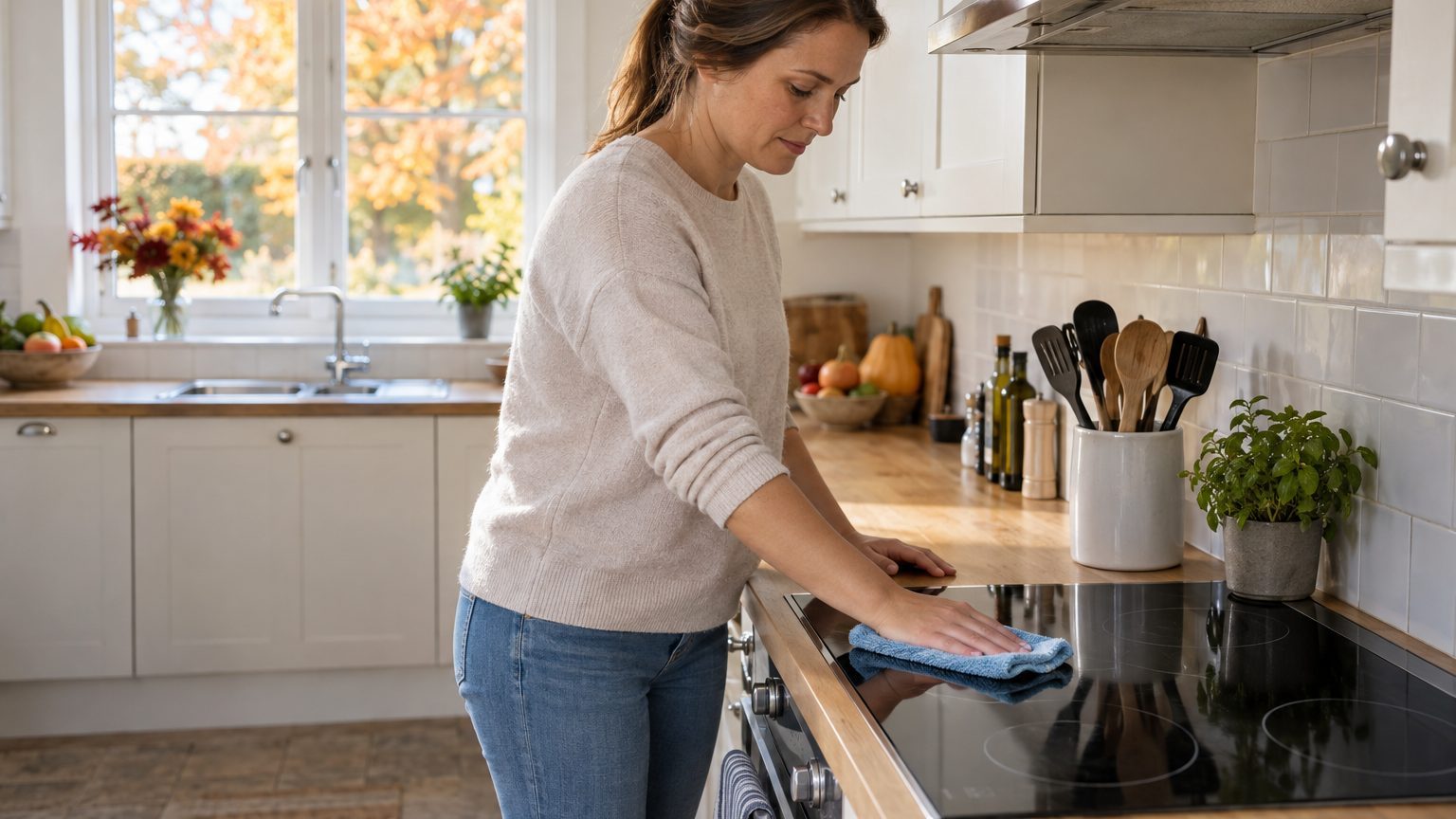
The surface under your pots decides how you clean it, and the wrong move costs real money. Steel wool scratches a glass-ceramic top, soaking a coil element ruins it, and grease in a gas burner’s ports makes the flame uneven. Knowing how to clean a stove top starts with knowing which of the three you own.
Safety comes first, whatever the type.
- Steel wool and abrasive powders permanently scratch glass-ceramic tops.
- Coil elements must never be submerged in water.
- Clogged gas burner ports cause an uneven, lopsided flame.
The ground rules before any spray bottle comes out
Make sure every control is off. Most cleaning guidance says to wait until the surface is cool, though one exception matters on glass-ceramic. Sugar, syrup, tomato sauce and milk are best dealt with right away, because they can bond to the hot surface and pit it. Some appliance makers also allow scraping while the glass is warm but not hot to the touch, with an oven mitt on your hand. The range of advice is real, so check your manual.
The toolkit is cheap. White vinegar, baking soda, a stack of microfiber cloths and a nonabrasive scrub pad handle most of the job. Vinegar and baking soda cut through grease and loosen stuck-on food on most stove tops, and the whole kit costs less than a single specialty cleaner.
Skip anything that scrapes.
Glass-ceramic and smooth electric tops: patience beats pressure
Smooth tops are the easiest to wipe and the easiest to ruin. Start dry. Sweep loose crumbs away with a dry microfiber cloth, because grit dragged around under a wet sponge works like fine sandpaper. For burnt-on residue, use a razor scraper made for glass-ceramic cooktops and hold it at about 45 degrees. Some cleaning pros go shallower, around 30 degrees on a wet surface, but both agree the blade should stay low and flat.
Steel wool, abrasive powders, chlorine bleach and ammonia are all off the table.
Once the scraper has removed the worst, put a dime-sized drop of ceramic cooktop cleaner on the affected spots. Rub it in with a nonabrasive pad, then buff with a clean, dry cloth or paper towel. Stubborn stains may need a second round, and that’s normal. Water spots on a clean, cool surface usually disappear with a spritz of white vinegar.
If you’d rather stay in the pantry, sprinkle baking soda over the mess and mist it with a vinegar-and-water mix. Cover the area with a damp microfiber towel for about 15 minutes, then scrub gently with the nonabrasive pad. Go easy on dish soap, though. Used undiluted on glass-ceramic, it can leave a film that is harder to remove than the original mess. Induction tops, which share the same glass surface, follow the same routine.
Coil burners and gas grates: take them apart
Electric coil stoves are the forgiving ones. With the stove off, cool and unplugged, grip each coil and pull its prongs straight out of the socket. Wipe the coils with a damp cloth or sponge and nothing more. A coil element should never be submerged, since water that gets inside can cause problems the next time you switch it on.
The drip pans underneath are a different story. They can take warm, soapy water, and a baking soda paste loosens the baked-on rings that no wipe will touch. Wipe the exposed stove surface with a mild dish soap solution while the pans are out. Let everything dry completely before the coils go back in, because a wet socket is the one mistake that turns a ten-minute chore into a service call.
Gas is messier but more tolerant.
Lift off the grates, burner caps and, where your manual allows, the knobs. Soak the grates in hot, soapy water or in a vinegar and baking soda mixture, and scrub the burner caps with a toothbrush and a degreasing spray. Wipe the cooktop surface itself with a nonabrasive cloth and a degreaser. Dry every piece thoroughly before you reassemble, since damp caps can sit unevenly on the burner base.
Then look at the burner ports, the tiny slots that spread the flame. Residue packed into them throws off the flame’s distribution, so a lopsided ring of fire is your cue to clear them. A toothbrush works for surface gunk, and a straight pin can free a stubborn blockage as long as you don’t enlarge the hole. And if you smell gas at any point, stop and call your utility.
A routine that keeps the deep clean short
A quick wipe after every cooking session is the whole secret, especially on glass-ceramic, where spills bond to the hot surface fast. Appliance technicians suggest a deeper session about once a month for gas caps and grates or for coil elements, or sooner if residue starts affecting how the burner performs. Five minutes weekly beats an hour quarterly.
Mixed surfaces call for a little care. Many stoves pair a glass top with stainless steel trim, and the two don’t share cleaners. Stainless does best with a stainless cleaner or diluted dish soap on a nonabrasive sponge. Glass cooktop cleaner, bleach and abrasive powders belong nowhere near it.
The one fast exception is melted plastic or kitchen foil on a glass-ceramic top. These join sugar on the list of messes to deal with immediately, so switch off the burner and scrape the spill carefully rather than waiting for it to cool and harden into the glass.
Sources : microfiberwholesale.com | nappliancerepair.ca