For most homes, hang curtain rods 4 to 8 inches above the window frame. That’s the short answer to how high to hang curtains. The long answer depends on your ceiling, your trim and the fabric you’re hanging.
Most people go too low.
- Hang the rod 4 to 8 inches above the window frame.
- Extend the rod 4 to 12 inches past the frame on each side.
- Set every rod in a room at the same height, based on the tallest window.
The number to remember, and why it works
The instinct is to mount the rod just above the window frame, and it’s the instinct that shortchanges a room. That placement makes rooms feel smaller and windows look shorter than they are. Lifting the rod draws the eye up the wall, so the window reads as taller than it is. It also lets the fabric overlap the top of the glass, which cuts down on the sliver of light that leaks over a rod set too tight to the trim.
Ceiling height sets the ceiling on your ambition. On an 8-foot ceiling, a rod 4 to 6 inches above the frame is the usual recommendation. For more drama, aim for roughly 12 inches above the frame, or halfway between the top of the window and the ceiling.
Taller ceilings and smaller windows call for more lift. In large rooms or those with high ceilings, start at 6 to 8 inches above the frame. Some designers push further and mount the rod 2 to 4 inches below the ceiling.
Your walls may veto the plan. Wall space, ceiling height, trim depth, crown molding and the load your wall can hold all limit how high you can actually go. Crown molding is the usual culprit, because a rod that collides with it looks worse than one set a few inches lower.
Mixed window sizes follow one rule: put every rod at the same height.
Set them all 4 to 6 inches above the tallest window. A row of rods at different heights on one wall looks like a mistake, even when each rod is technically correct for its own window.
Width and length: the other half of the math
Height gets all the attention, but width does quiet work. A common guideline is to extend the rod 4 to 12 inches beyond the frame on each side. Parked there, the open panels stack against the wall instead of covering the glass, so the window looks bigger and lets in more light.
Length follows from the rod, not from the window. Mark the rod height on the wall first, then measure down to the floor and add hem allowance. The usual target is for the hem to just barely touch the floor or hover about half an inch above it. Ordering panels before you’ve marked the wall is how people end up with curtains that stop awkwardly short.
Ready-made panels complicate things. The common 84-inch panel is sized for standard doors and windows around 80 inches high. If you want the rod higher, check the available lengths before you drill, since raising the rod can leave curtains too short, creating bottom gaps or a floating look.
Clips and rings change the arithmetic. Tab tops, tie tops and clip rings drop the fabric a few inches below the rod, so move the rod up a bit to compensate.
Room by room, season by season
The bedroom is where a few inches matter most. A rod set high with panels that overlap the window on all sides keeps early light out and the heat in. Winter drafts tend to find the gap between a window and a short curtain, so full-length panels earn their keep from November through March.
Bathrooms are the exception to the “go long” habit. A hem that pools on a damp floor will stay wet and start to smell. Keep the rod high for the stretched-window look, but stop the fabric an inch or so above the floor, or choose a moisture-tolerant material.
Entryways are tight on space, which makes them a good test of the rule. A narrow door with sidelights or a small window beside a coat rack still benefits from a rod mounted above the trim. Curtains there should clear wet boots and the tray beneath them, so a hem that hovers above the floor beats one that drags. Where a door swings, make sure the rod’s width doesn’t block its arc.
The living room rewards ambition. Large windows and standard 8-foot ceilings give you the room to go high and wide, and the effect on proportions is the biggest of any room in the house. A rod at the upper end of the range, extended well past the frame on each side, turns an ordinary window into a feature wall.
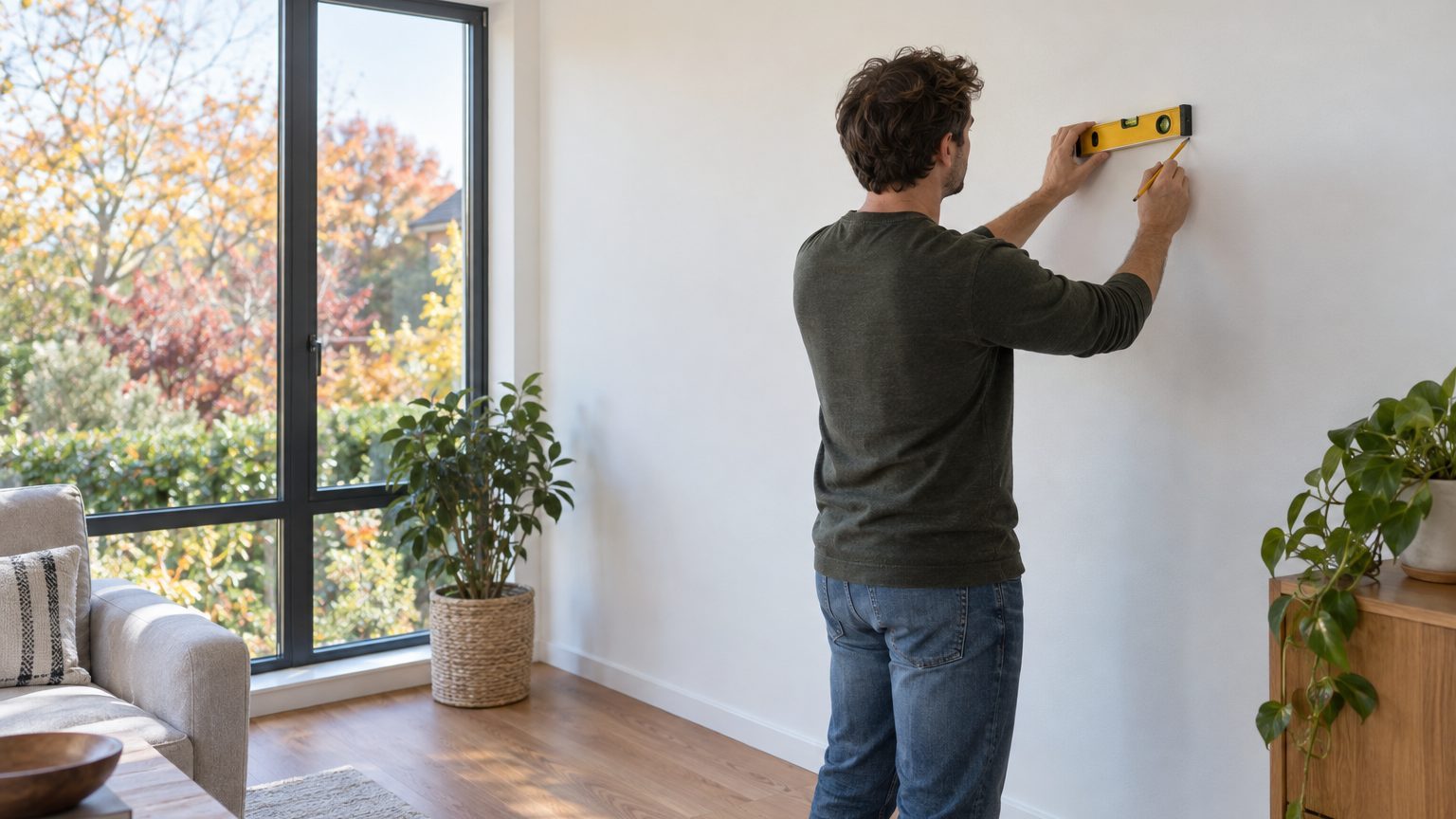
Use a level, every time.
Measure the wall, mark the height with a pencil, and check both ends before you drill. A level keeps the rod straight, and it’s the cheapest insurance in the whole project. Long rods also need attention to the hardware: spans past about 4 feet tend to sag, so plan on a center support bracket anchored into a stud or a proper wall anchor.
One last practical note: if you’re ordering custom panels, give the maker the measurement from the top of the rod to the floor, not the window height. Most custom curtain makers work from that number, and it’s the one that decides whether your hem lands where you planned.
Sources : fabricresource.com | deconovo.com